If your child wants to go to art school, the application will look familiar at first. They apply through UCAS like everyone else, and they write a personal statement. But art school applications have one big difference: the portfolio. For most fine art courses, the work your child has made, and how they talk about it, carries more weight than anything else. This guide to art school applications is for parents and carers.
It explains how UK art school applications work for 2027 entry, the dates that matter, what it all costs, and where parents can help most. Our mentors have taught at UAL and sat on art school admissions panels, so we’ve seen these applications from both sides.


Two routes in: a Foundation year, or straight to a degree
A BA in Fine Art usually takes three years in England, Wales and Northern Ireland, and four in Scotland. There are two common ways to get there.
Many students first take a one-year Foundation Diploma in Art and Design after their A levels. A Foundation lets them try different kinds of art and design, build a portfolio and find their direction before they choose a degree. It can also be free. At UAL, for example, the Foundation was free for UK students under 19 for autumn 2026 entry. Students aged 19 or over paid £5,255, plus a £165 registration fee. Applicants make an initial application with a personal statement, then send a digital portfolio of up to 25 pages, and applications for 2027/28 open in autumn 2026.
Other students apply straight to a BA from school, with a portfolio built during their A levels or the IB. Both routes work. The right one depends on how ready the work is, not on your child’s age. Our UAL Foundation guide explains the Foundation route in more detail, using UAL’s course as the example. For the portfolio itself, see our guide to building a strong art foundation portfolio.
How UK art school applications work
For a BA, your child applies through UCAS. One application covers up to five choices, and the same personal statement goes to all of them. Their school or college then adds a reference before the application is sent.
After that, each art school runs its own process. Most ask for a digital portfolio, usually uploaded a few weeks after the UCAS application. Some also invite applicants to an interview, where they talk through their work. Glasgow School of Art, for instance, wants its Digital Portfolio by 13:00 on 20 January 2027, a week after the main UCAS deadline. So read every course page carefully, because no two schools ask for quite the same thing.
The personal statement also changed for 2026 entry. Instead of one long essay, applicants now answer three questions:
- Why do you want to study this course or subject?
- How have your qualifications and studies helped you to prepare for this course or subject?
- What else have you done to prepare outside of education, and why are these experiences useful?
The three answers share a limit of 4,000 characters, and each one needs at least 350. For art applicants, the first and third questions are where the work comes in: the artists they look at, the exhibitions they’ve seen, and what they make outside school.
Key dates for art school applications in 2027
These are the UCAS dates parents need for art school applications for 2027 entry. Times are UK time.
- 12 May 2026: UCAS applications opened for 2027 entry.
- 1 September 2026: completed applications can be sent to UCAS.
- 15 October 2026, 18:00: the deadline for Oxford and Cambridge, which includes the Ruskin School of Art BFA at Oxford.
- 13 January 2027, 18:00: the equal consideration deadline for most undergraduate courses, including most BA Fine Art courses.
- Late January to March 2027: portfolio uploads and interviews at many art schools.
- 25 February 2027: UCAS Extra opens, for applicants who have used all five choices and hold no offers.
- 30 June 2027, 18:00: the final UCAS deadline. After that, applications go into Clearing, which opens on 2 July.
Each art school’s own portfolio and interview dates are in our 2027 art school deadlines timeline. And if your child is in Year 12, the same cycle runs again a year later. That gives them a full year to build a portfolio, which is the most useful head start you can give them.
What art schools look for in a portfolio
It’s easy to assume art schools want polished, finished pieces. In fact, most want to see how your child thinks. UAL describes the portfolio as “a way of showing us your skills, personality and potential”, and its portfolio advice says plainly: “We’re not just looking for polished, finished work.”
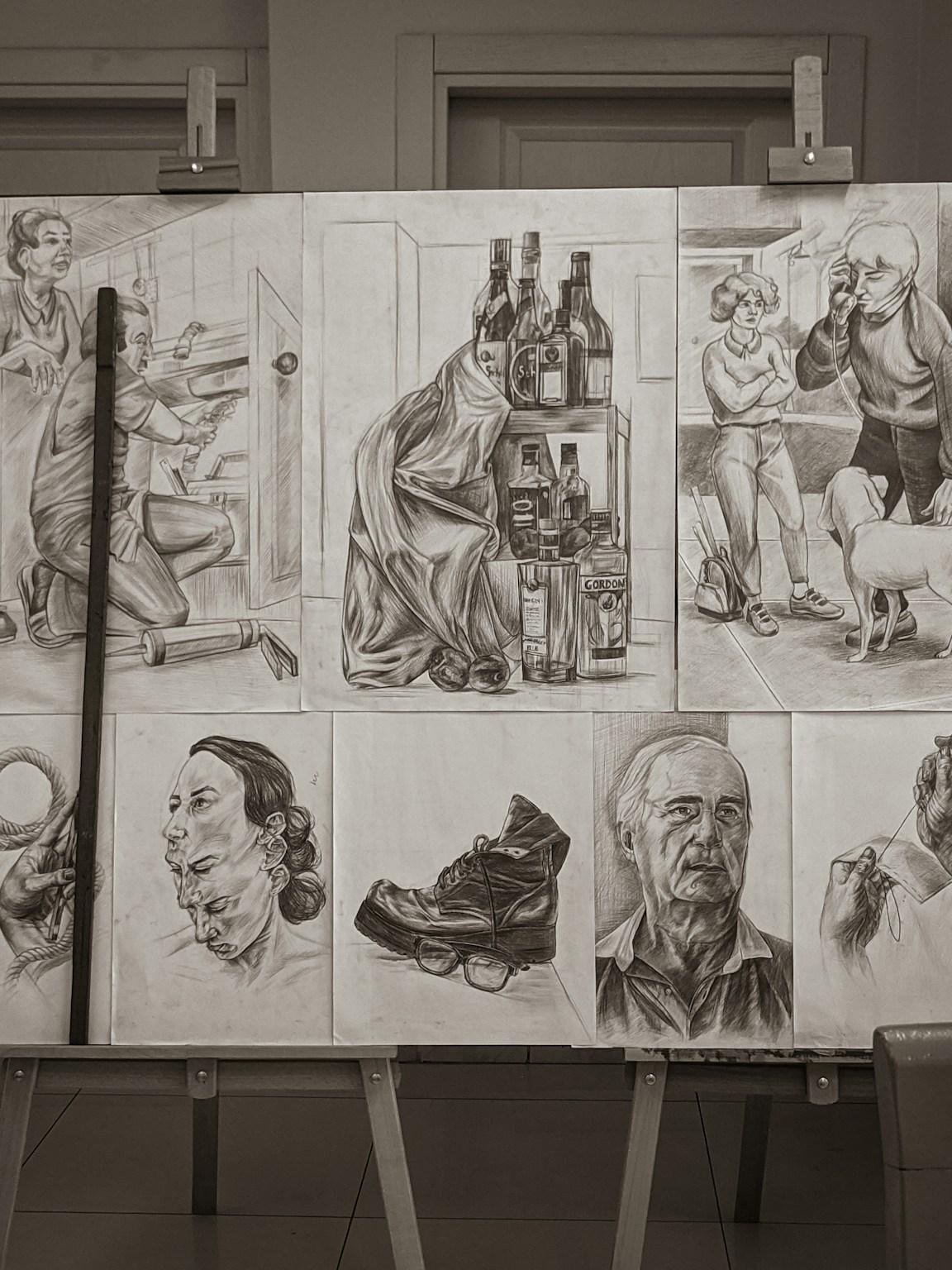
So a strong portfolio usually shows:
- drawing from observation, not only from photographs
- ideas developed over time, with sketchbooks and work in progress
- experiments with different materials, including the ones that didn’t work
- a few projects your child genuinely cares about, rather than one example of everything
- clear, well-lit photographs of every piece
Grades matter too, and every course sets its own entry requirements. For fine art, though, the portfolio usually carries the most weight. Our guide to art school portfolio preparation in the UK explains what admissions tutors look for, and how to build a strong UCAS art portfolio covers the practical side.
Where parents help most with art school applications
Parents make a real difference to art school applications, mostly behind the scenes.
- Keep the calendar. Put every deadline in one place: UCAS, each school’s portfolio upload and any interview dates. Several tend to land in the same few weeks.
- Protect time and space for making. A portfolio takes hours of work every week. A corner to work in, a budget for materials and a lighter autumn all help.
- Go to open days and degree shows. Final-year degree shows, usually in early summer, show you what a school’s students actually make. They’re often the best way to choose.
- Read the course pages together. Entry requirements, portfolio rules and fees differ from school to school.
- Proofread, but don’t rewrite. You can check the personal statement before it goes, but it has to be your child’s own work. UCAS runs checks for similarity, and if it finds a statement similar to others, “the universities or colleges it is intended for may be notified.” UCAS also warns applicants not to exaggerate, because “you may get caught out in an interview.”
- Sort out the admin. Your child can add you as a nominated contact on their UCAS application, which lets you discuss it with UCAS. However, UCAS and the universities still write to your child, so agree how you’ll both keep track of messages.

Where to step back in art school applications
The work has to be your child’s own. Admissions tutors see a great many portfolios, and work that someone else has “improved” rarely holds together. It also shows at interview, when your child has to explain every decision they made.
So the most useful thing you can do is ask good questions instead of giving answers. What did you want this piece to do? What would you change if you started again? Which project are you proudest of, and why? Questions like these help your child find their own words, which is exactly what an interview panel wants to hear.
What art school costs
- Tuition fees. In the 2027/28 academic year, universities in England can charge up to £10,050 for most full-time undergraduate courses, up from £9,790 in 2026/27. Fees work differently in Scotland, Wales and Northern Ireland.
- Student finance. For students from England, student finance moves to a new system, the Lifelong Learning Entitlement, for courses starting from 1 January 2027. That includes most degrees starting in autumn 2027, and applications open at the end of October 2026. The Maintenance Loan for living costs is still based on household income, and students who don’t give those details can only get the minimum amount. So you’ll usually be asked for your income details.
- Foundation. Often free for UK students under 19, as it was at UAL for 2026 entry.
- The extras. Materials, printing, photographing work, and travel to open days and interviews all add up, so it’s worth budgeting for them early.
If you’re weighing up whether it’s all worth it, our post Are UK Art Schools Worth It? looks at that question honestly.
When outside help is worth it
Many students get into art school with a good art teacher and nothing else. Outside help is worth considering when:
- your child’s school has limited art teaching, or no one who knows art school admissions
- they’re aiming at a very competitive course, such as the Slade or Central Saint Martins
- they’re applying abroad as well as in the UK, where the rules are different
- the deadline is close, and the portfolio needs an expert eye
- they applied before without success, and want to try again
Choosing an art portfolio tutor
If you do look for help, these questions sort the good from the rest:
- Have they taught on art school courses, or sat on admissions panels?
- Do they know the schools your child is applying to?
- Will they help your child develop their own ideas, rather than tell them what to make?
- Is there a clear plan, and a clear price?
- If your child is under 18, are the tutors enhanced DBS checked, and how are sessions run?
We offer three kinds of help, all online, and our mentors are enhanced DBS checked.
A 1-hour consultation (£150) helps you work out what support your child needs, if any, and which kind of mentorship would suit them. That might be longer-term mentorship or something more intensive, depending on how much support they need. We then recommend a package, design a bespoke programme and assign a specialist mentor, or mentors, to help them achieve their goals.
A 90-minute portfolio review (£250) is focused feedback on the work they already have, usually as a final step before applying, when time is short. Everything is covered live, one-to-one, and we email a short written summary of the priorities within a day.
Portfolio and admissions mentorship is one-to-one support from a practising artist, designed around your child. Sessions are typically weekly, and programmes usually run for 3 to 12 months, for students with time to build.
“Our son’s mentor has gently led him to feel confident about his ability and knowledge and allowed him to express himself where he would not have had the confidence to do so before.”
Katie Rose, parent
We welcome international applicants too, whether they’re applying in the UK, the US, Europe or elsewhere, and we tailor each portfolio to the school’s own format and selection process. Our mentorship is also neurodiversity-aware, with ADHD- and ASD-friendly support: clear structure, calm pacing and practical next steps.
“The end result was brilliant. He achieved his A level and gained wonderful knowledge and connection with art.”
Julia, parent of an A-level Art student
Three of our students
Cadmium students have been accepted to 40+ leading art schools worldwide, and our Student Results page shows where.
Yuxin
Portfolio & Admissions Mentorship
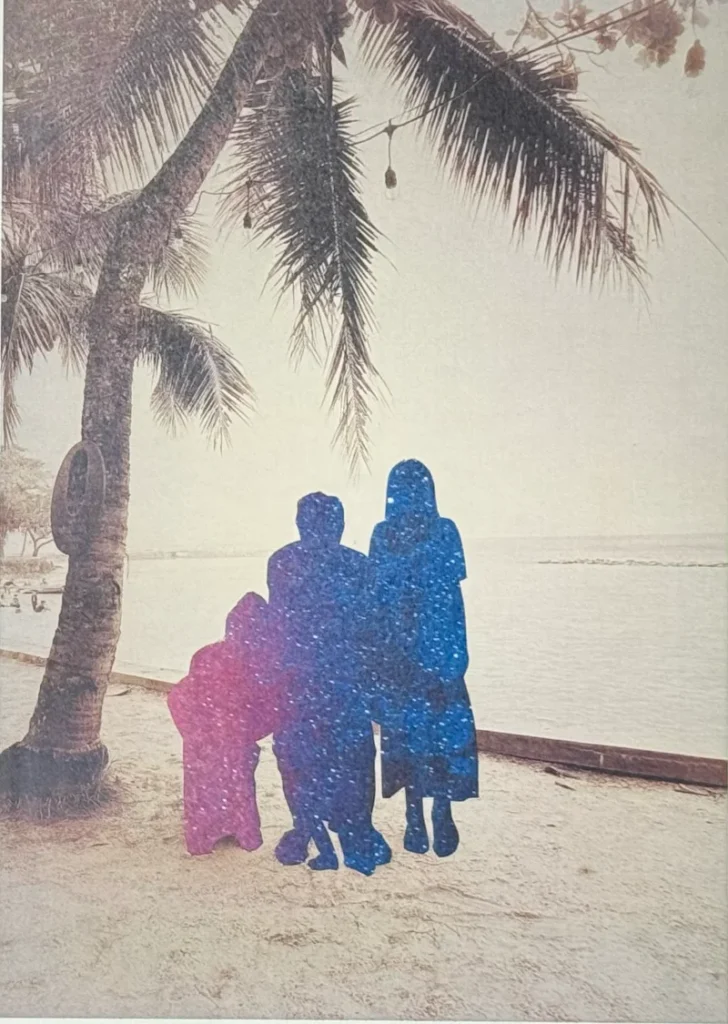
Yuxin turned a weak BTEC portfolio into a cohesive body of work and received five BA Fine Art offers and a place on UAL Foundation. She is now studying at Central Saint Martins, her first choice.

Nawal
Portfolio & Admissions Mentorship
Nawal built her portfolio from scratch to secure a place on her first-choice BA Fine Art & Art History programme at Goldsmiths.

Kiki
Portfolio & Admissions Mentorship
Kiki raised her A-Level Art grade from a C to an A and secured offers from King’s College London and UCL.
“My daughter’s mentor helped her develop ideas more clearly, strengthen the presentation of her work, and better understand the direction required for university applications.”
Yuxin’s mum, parent of a BA Fine Art student at Central Saint Martins
If you’d like to talk through your child’s art school applications, Book a Consultation (1 hour, online, £150) and we’ll look at their work and plans together. If the deadline is close, Book a Portfolio Review (90 minutes, online, £250) for focused feedback before they submit.