A strong art foundation portfolio is not a collection of your best school projects. It is evidence of how you think: what you are curious about, how you test ideas and where you might go next. We’ve taught at UAL, interviewed applicants and assessed students’ work, so this guide sets out what foundation selectors are really looking for, and how to show it.


What an art foundation year is for
An art foundation course exists to help you narrow your focus. During the year you try a wide range of disciplines, from graphic design, illustration and fashion to painting, sculpture and more conceptual work. That breadth helps you decide which creative area to pursue. Once you’ve chosen, you specialise and build a strong portfolio, usually geared towards applying for a BA in that specialism.
Every course structures this a little differently, so check the one you’re applying to. At UAL, Diagnostic mode lets you explore 12 specialist pathways in the first unit before you specialise. Specialist mode, by contrast, lets you apply straight to one of four areas: 3D Design, Fashion and Textiles, Fine Art or Communication Design. Similarly, Kingston’s Foundation Diploma begins with an exploratory stage, where you rotate through each specialism. It ends with a self-directed final major project and a public exhibition.
What selectors want from an art foundation portfolio
A strong art foundation portfolio shows experimentation and promise in ideas: out-of-the-box, innovative thinking. In short, selectors are looking for budding artists, not students.
In practice, that means self-led ideas rather than work that only follows the briefs your tutors have set. Selectors want to see you experimenting with unconventional materials and bringing a genuinely different perspective.
They are looking for artists at the start of their journey: people who are discovering themselves, who are bold, and who are developing their own visual language. Art is a self-directed discipline, and the path of an artist is not an easy one. That is why selectors look for self-initiation early on.
What selectors don’t want
Technical drawing skill on its own is not enough. Selectors are not looking for students who simply follow the brief, or who are chasing validation and good marks.
Above all, avoid pastiche. Taking an artist you admire, making a small tweak to their work and then going no further tells selectors nothing about you.
Your references can come from anywhere
Selectors want to see conceptual development and reflection. For example, visit contemporary art galleries as well as lesser-known artist-run spaces, organise exhibitions with friends, or start collaborative projects.
Have an expanded notion of art, and of your references. You don’t have to look only at artists conventionally described as fine artists. It is just as legitimate to be inspired by musicians, DJs, album covers, architects, nature, writers, filmmakers and fashion.
What matters is where you take that material next. The intellectual process of translating your sources is the key, and that is true of any strong portfolio, not only an art foundation portfolio.
Make work that belongs to now
Selectors want work that is engaged with the world now. It doesn’t have to be overtly political, but it should feel present, with a real vitality to it. Liking the style of Salvador Dalí, or painting in a German Expressionist style, is not enough on its own.
So contextualise your work. Ask yourself where you could situate it in time and place. Does it look like work being made now, or like work from the 1940s or the 1970s?
When you select work, also ask yourself who you would want to be in an exhibition with. Which contemporary artists share your ideas and sensibilities? This is not about style: you could be a painter and they could be a video artist. What connects you is a shared thread of ideas, interests and values.
Make as much work as possible, then edit down
We recommend making as much work as possible and then editing down. Experimentation is the key here, because you discover your own visual language and sensibilities by making enough work, trying things out and actually doing them.
Make drawing a daily habit
Drawing still matters. UAL, for instance, asks for drawings made from observing the world around you. Life drawing helps, and we recommend taking regular life drawing classes. Beyond that, get into the habit of sketching from observation: on the train, in cafes, or while daydreaming out of your bedroom window. Make it a habit, even an impulse. Drawing strengthens the connection between your eye and your hand, so think of it as a muscle you build through consistent practice.
Sketchbooks and process in your art foundation portfolio
Sketchbooks are important. When you start selecting work, we recommend photographing everything and putting it all into one folder on your desktop, including your notes and sketches. Then select and edit down from there.
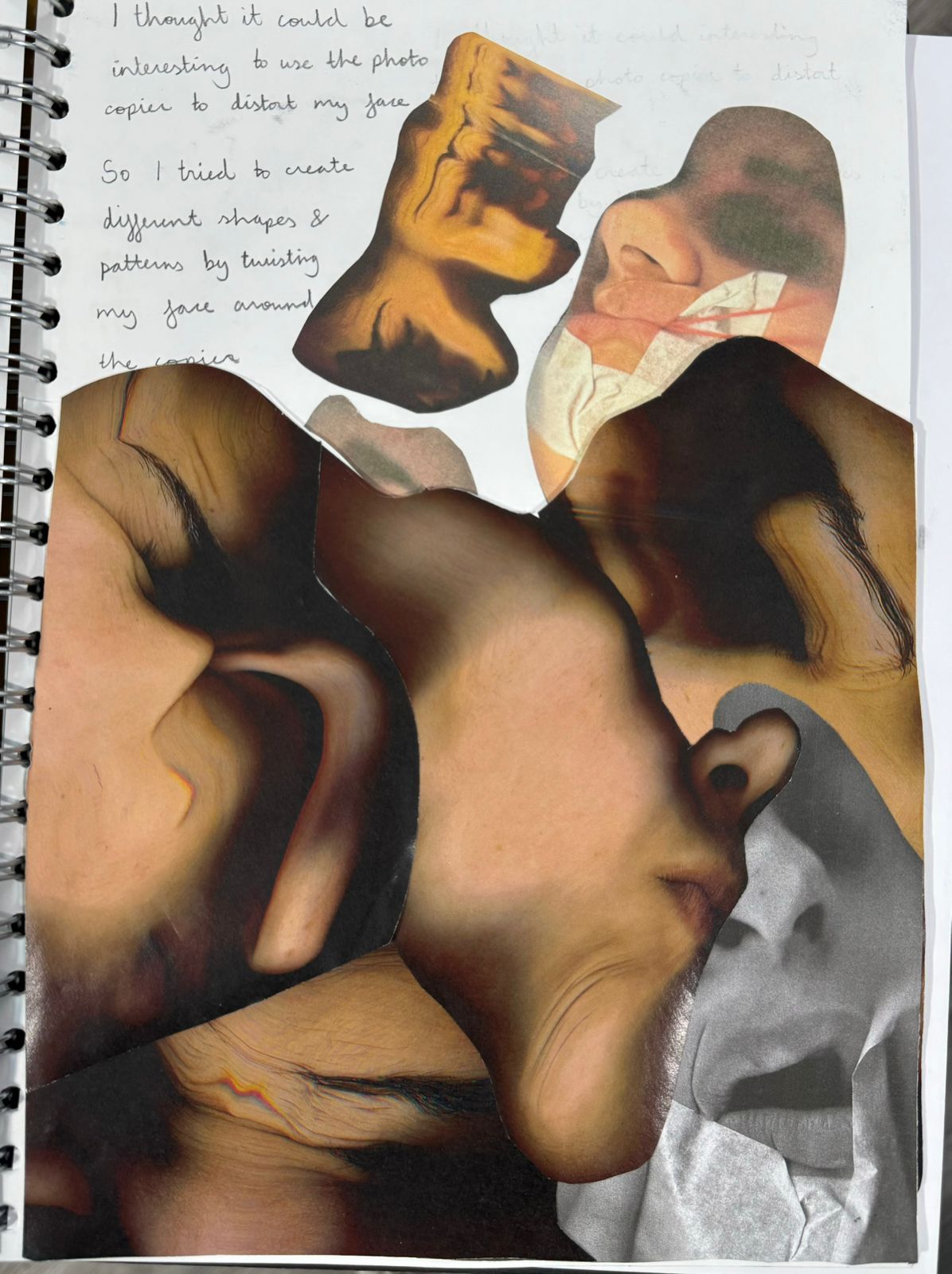
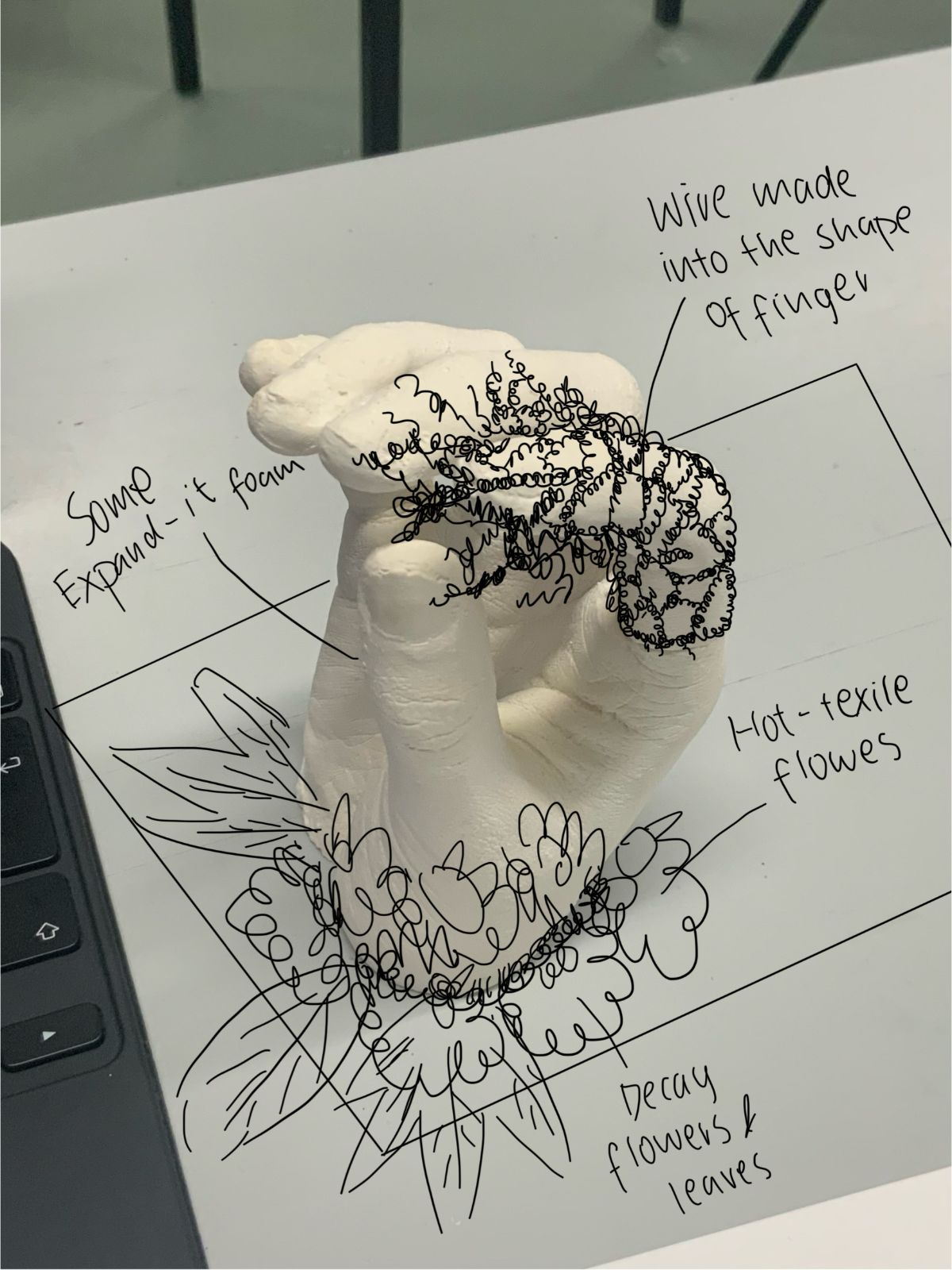
Your thought process is just as important as your finished pieces, if not more so. At this level, the portfolio is meant to give the admissions panel an insight into who you are: how you think, how you approach creative problems and, in short, what you would bring to the incoming cohort and its artistic community. That is why process belongs in your portfolio.
As a general rule, start with the finished piece, then add one or two process pages after it, so selectors can see how you got there. However, not every final piece needs process pages. Your page allowance is limited, so be selective.
What to include in your art foundation portfolio
Every course sets its own portfolio rules, so check the one you’re applying to. UAL’s guidance is a good example of what is usually asked for.
UAL asks for a digital portfolio of up to 25 pages, uploaded to PebblePad, its online portfolio tool. It should be recent work that shows your creative strengths, including:
- drawings you’ve made from observing the world around you, such as landscapes, cityscapes, interiors, people and objects
- work in progress, such as experimental drawings and storyboards
- notes on PebblePad that explain how your work developed and any techniques you used
- experiments with a wide range of methods and materials, such as collage, model making, photography, video and fabric manipulation
- your research, and how it informed and inspired your work
Your research and process can go in as scanned pages, photographs, or even a short video of a sketchbook, notebook or blog.
UAL then selects applicants on their potential and current ability across five areas: visualisation skills such as drawing, photography and 3D work; research and investigative skills; creative thinking and problem-solving; the use of a range of materials and processes; and an interest in art, design or related subjects.
For UAL’s dates and fees, see our UAL Foundation Diploma guide, and for every key date this year, our 2027 art school deadlines timeline.
Is a foundation year only a UK thing?
As a separate one-year course before a degree, the foundation is mainly a UK route, although students from outside the UK apply too. UAL, for one, takes international students, who generally pay international fees. In the US, by contrast, “foundation” often means the first year of a four-year BFA. At RISD, for example, every undergraduate spends their first year in the same studios, known together as Experimental and Foundation Studies.
If you’d like one-to-one support, see how we help with art foundation portfolio preparation. Not sure what you need yet? Book a Consultation (1 hour, online, £150) to talk through your work and next steps. If your deadline is close, Book a Portfolio Review (90 minutes, online, £250) for focused feedback before you submit.