
Goldsmiths BA Fine Art portfolio advice often begins in the wrong place. Applicants look for examples, formats, or evidence of technical skill. However, the deeper question is sharper: can your portfolio prove that you can work independently inside one of the UK’s most self-directed Fine Art environments?
Applying to Goldsmiths this year? See how we prepare applicants for Goldsmiths.
The common misconception is that Goldsmiths wants the most polished applicant. It does not. Polish can help, but only when it serves an artistic enquiry. Therefore, a beautiful drawing, a clean digital render, or a technically fluent painting may still read as weak if it behaves like schoolwork.
Goldsmiths’ own BA Fine Art programme page makes the institutional position unusually clear. The course combines Studio Practice and Critical Studies, and it states that students are not given set projects. That single detail changes the admissions logic.
Why Goldsmiths BA Fine Art Is Not a Standard Portfolio Course
Goldsmiths BA Fine Art is built around autonomy. Studio Practice forms 75% of the course, while Critical Studies forms 25%. In addition, Goldsmiths describes studio work as research, not simply production.
This matters because admissions tutors are not only asking whether you can make work. Instead, they are asking whether you can generate the conditions for work to develop. Can you begin without a brief? Can you test an idea without knowing the outcome? Can you explain why a material decision matters?
The Goldsmiths programme specification also stresses independent learning, critical thinking, writing, discussion, and peer evaluation. Consequently, a portfolio that only displays outcomes may feel incomplete.
A stronger Goldsmiths portfolio shows the applicant thinking through the work. It gives evidence of decisions, changes, failures, references, material tests, and unresolved questions.

The Portfolio Is Not a Display Case
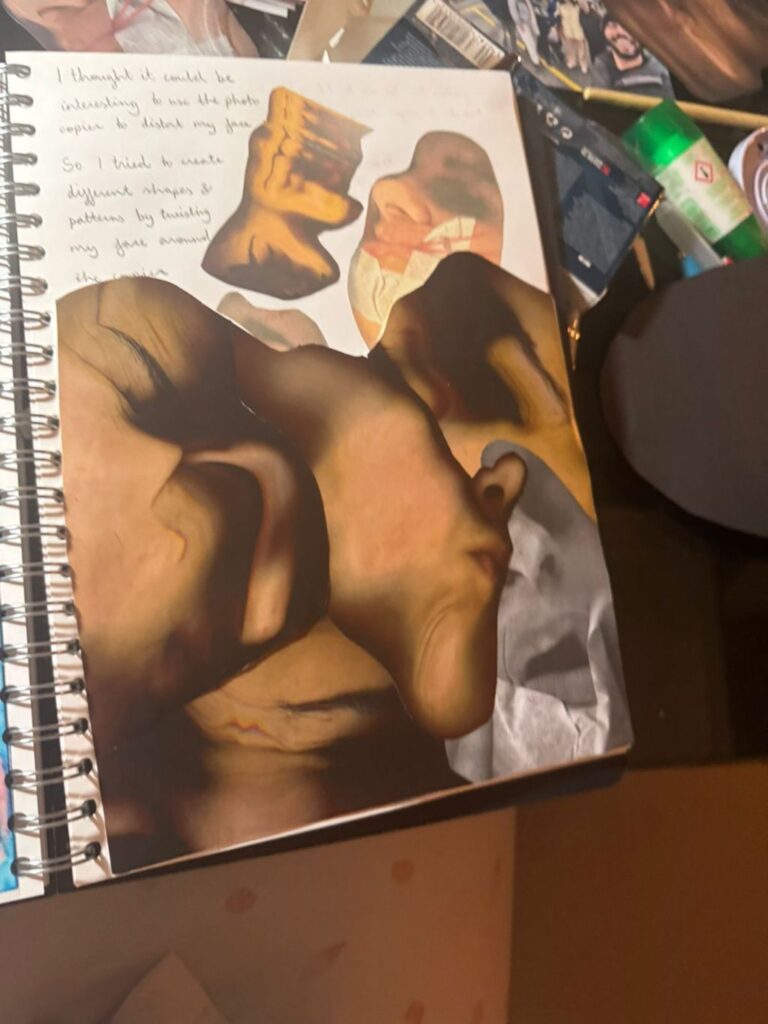
Many applicants treat the portfolio as a best-work archive. However, Goldsmiths asks for something more exact. Its portfolio guidance asks for up to 12 items, plus an essay from Foundation, A-level, or equivalent study.
More importantly, Goldsmiths asks for independent enquiry, visual curiosity, working process, and work that goes beyond the requirements of a brief. Therefore, the portfolio should not feel like a collection of successful assignments.
It should read as the beginning of a practice.
That does not mean every piece must use the same medium. Painting, installation, sound, moving image, performance, textiles, writing, photography, and sculpture can all belong. However, the work needs a recognisable pressure point. Something should be at stake.
For example, a portfolio organised around memory and domestic objects may move through drawing, casting, sound, and archive material. By contrast, a portfolio arranged as “one painting, one sculpture, one video, one textile piece” can feel arbitrary.
What “Independent Enquiry” Actually Means
Independent enquiry is often misunderstood. It does not mean making work alone. Nor does it mean rejecting teaching. Rather, it means showing that you can notice a problem, pursue it, and make decisions that are not simply inherited from a brief.
In a Goldsmiths portfolio, independent enquiry may appear through:
- a tutor-set project that has been redirected into something more personal;
- a material test that changed the work’s scale or form;
- a failed piece that led to a better question;
- research that affected how the work was made;
- documentation that shows how display changed the work;
- a reference used precisely, rather than name-dropped.
This is where weaker applicants often misread the task. They include sketchbook pages because they think “process” is required. However, process only matters when it reveals thought.
A page of thumbnails may add little. By contrast, a photograph of a collapsed clay test, a note about why it failed, and the work that followed can tell admissions tutors far more.
Technical Skill Helps, But It Cannot Carry the Application
Goldsmiths is not anti-skill. That would be a lazy reading. However, the course does not treat technical skill as the final destination.
A highly skilled portrait can be weak if it only proves observation. Meanwhile, a rough object, performance, or moving-image fragment can be compelling if it shows pressure, judgement, and a developing artistic problem.
Admissions tutors are likely to ask: why this form? Why this material? Why this scale? Why this relationship between image, object, body, sound, site, or text?
For this reason, applicants should examine every polished piece with suspicion. Does it extend the enquiry, or does it merely reassure the viewer that the applicant can draw?
The Most Common Goldsmiths Portfolio Mistakes
Goldsmiths attracts applicants who know its reputation. However, reputation can become a trap. The weakest portfolios often perform “Goldsmiths-ness” rather than understanding the course.
Common mistakes include:
- submitting a schoolwork archive rather than a practice;
- using technical polish as a substitute for enquiry;
- including unrelated experiments to appear interdisciplinary;
- presenting process as decorative sketchbook evidence;
- relying on famous Goldsmiths alumni as motivation;
- treating Critical Studies as secondary;
- submitting long, unedited moving-image work;
- preparing interview answers that sound rehearsed.
Each mistake has the same root problem. The applicant has not made the admissions tutor believe they can use freedom productively.
Why the Essay Matters More Than Applicants Think
Goldsmiths asks applicants to upload an essay from Foundation, A-level, or equivalent study. Many applicants treat this as an administrative extra. However, that is risky.
Critical Studies is not ornamental at Goldsmiths. It runs through the degree and supports studio practice. Therefore, weak writing can expose a serious gap.
The essay does not need to sound like postgraduate theory. In fact, overblown language can work against the applicant. Instead, it should show that the applicant can build an argument, use references accurately, and analyse works or ideas.
A good essay may strengthen the application because it proves intellectual habits. It shows how the applicant reads, connects, questions, and sustains thought. For applicants whose writing is unclear, Cadmium’s Writing & Research Mentorship can help refine the relationship between practice, context, and language.
How to Make the Portfolio Read as a Practice
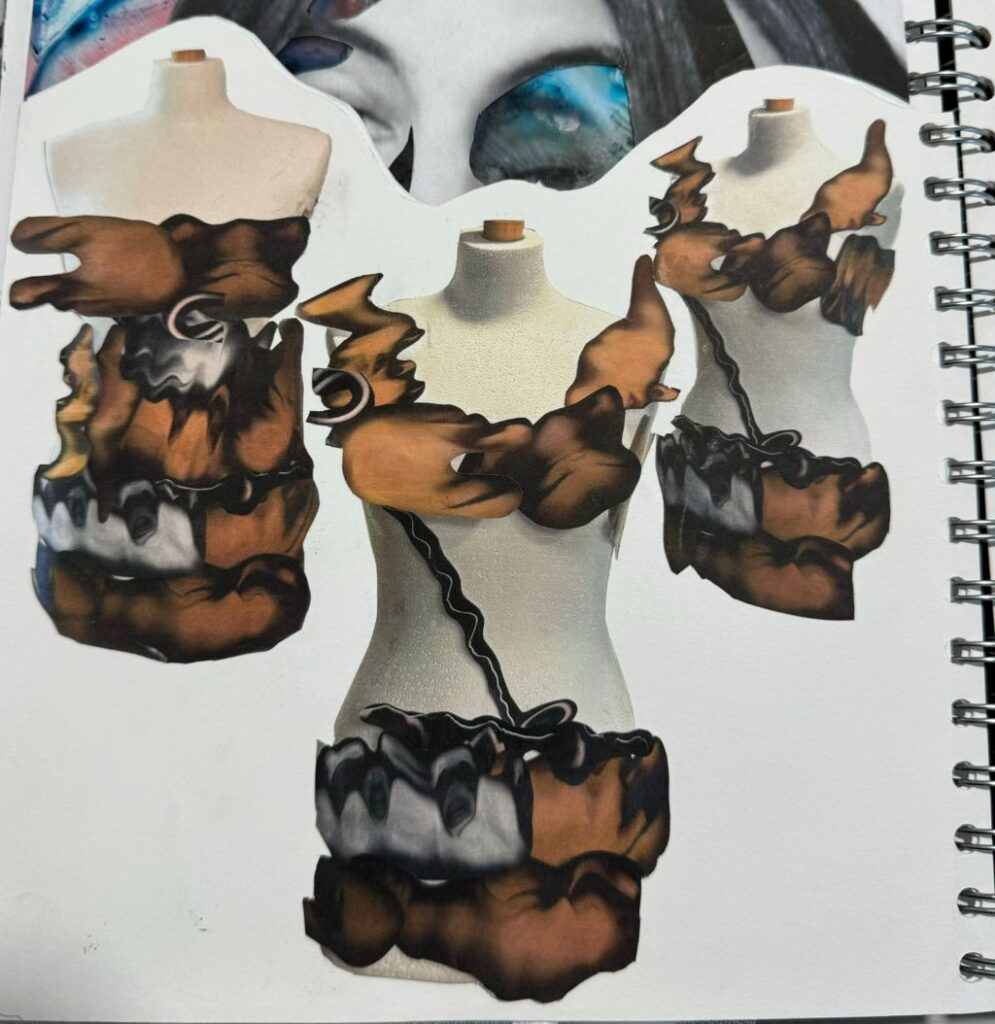
A competitive Goldsmiths portfolio should not be arranged only by medium. Instead, it should clarify how the work develops.
For example, the structure might move from an early observation into a material test, then into a larger work, then into documentation, then into a current unresolved piece. However, the exact ordering depends on the work itself.
What matters is presentation logic. Admissions tutors should sense that each item earns its place. They should also see why different media belong to the same artistic intelligence.
Captions matter here. They should be factual and concise: title, medium, dimensions, date, duration, and context where needed. Long explanations can flatten the work. Meanwhile, no context can leave important decisions unreadable.
For applicants at Foundation, BA, or BFA level, Cadmium’s Portfolio & Admissions Mentorship focuses on identifying weak, repetitive, or unresolved work and clarifying how the portfolio reads.
Preparing for the Goldsmiths Interview
The Goldsmiths interview is not a performance of certainty. It is closer to a critique. Therefore, applicants need to speak about work in a way that is specific, reflective, and open.
A strong applicant can discuss:
- what the work began with;
- what changed during making;
- which piece failed and why;
- which artists or writers affected a decision;
- how critique changed the work;
- what they would make next;
- why Goldsmiths’ no-projects culture fits their practice.
By contrast, a weak interview often stays at the level of description. “This piece is about identity” is not enough. What kind of identity? Why this material? What does the form make possible? What remains unresolved?
Applicants preparing for interview should avoid over-coaching. Instead, they need practice answering from the work itself. Cadmium’s art school interview preparation is shaped around the portfolio, rather than generic question drills.
What Parents Should Understand
Parents often judge portfolios through finish, realism, and visible effort. That is understandable. However, Goldsmiths uses a different lens.
A less polished work may be more important if it shows a decisive shift. Similarly, an unfinished experiment may reveal stronger potential than a clean final piece.
This can be difficult for families because risk looks unstable from the outside. Yet Goldsmiths is testing readiness for an open, critique-heavy studio culture. Therefore, the applicant must show judgement, not just diligence.
For families planning earlier preparation, Foundation portfolio support can help applicants move beyond assignment-led work before BA applications become urgent.
Goldsmiths Is Not Asking Applicants to Imitate Goldsmiths
Goldsmiths’ history matters. Its association with contemporary British art, critical practice, and the YBA generation still shapes how applicants imagine the institution. However, imitation is a poor strategy.
The point is not to look provocative. Nor is it to perform conceptual difficulty. Instead, applicants need to show that they can survive a non-prescriptive environment without becoming vague.
Goldsmiths wants applicants who can define a problem and keep working through it. Therefore, the strongest portfolio does not shout “I am edgy enough for Goldsmiths.” It quietly proves that the applicant has already begun to think like an artist.
Not Sure Whether Your Goldsmiths Portfolio Is Competitive?
The Goldsmiths BA Fine Art portfolio is difficult because the requirements appear open. Yet the real standard is precise. Goldsmiths wants evidence that an applicant can enter a no-projects, critique-heavy, research-led BA and use that freedom with seriousness.
A portfolio built only on technical polish may not be enough. Similarly, a portfolio full of disconnected experiments may miss the point. The strongest applications show authored direction, material intelligence, research habits, and the ability to speak about work without flattening it.
Cadmium works with Foundation, BA, BFA, MA, MFA and PhD applicants through an online-first, artist-led admissions mentorship platform. Our mentors include practising artists and admissions specialists with experience across UK, US and international art school applications.
For Goldsmiths applicants, our Portfolio & Admissions Mentorship focuses on identifying weak, repetitive, or unresolved work, clarifying the central enquiry, refining how the portfolio reads, strengthening documentation, and developing writing that gives the practice sharper definition.
If your Goldsmiths BA Fine Art application is approaching and the portfolio still feels scattered, over-polished, or difficult to explain, this is the moment to get a sharper read. You can book a call with Cadmium to discuss your route, deadline, and which Cadmium programme is the right fit.
A stronger submission usually begins with one uncomfortable question: what is the work asking Goldsmiths to believe about you?