The School of Visual Arts BFA Fine Arts portfolio often creates a specific misunderstanding. Many applicants assume SVA is looking primarily for technical excellence. They focus on polished drawings, refined paintings, and finished outcomes. As a result, portfolios become increasingly controlled while becoming less interesting.
Applying to SVA this year? See how we prepare applicants for SVA.
The problem is that SVA’s Fine Arts department is not built around a single medium or aesthetic. It is built around experimentation, material exploration, critique culture, and participation in New York’s contemporary art ecosystem. A portfolio that demonstrates skill but reveals little curiosity can therefore feel less convincing than applicants expect.
This distinction matters because the School of Visual Arts BFA Fine Arts programme occupies a very particular position within American art education. It combines strong technical foundations with broad interdisciplinary exploration, professional exposure, and access to one of the most active contemporary art environments in the world. Applicants who understand this structure tend to make different portfolio decisions from the beginning.
The strongest applications do not simply show what an applicant can make. They reveal how an applicant thinks, investigates, experiments, and develops work over time.
This article examines what SVA BFA Fine Arts actually values, where applicants often misunderstand the programme, and what admissions reviewers are likely looking for when assessing a portfolio.
Why SVA Fine Arts Is Different From Many Other BFA Programmes
Many undergraduate fine art degrees position themselves around a specific philosophy.
RISD places significant emphasis on material rigour. Goldsmiths often attracts applicants interested in critical and conceptual frameworks. Parsons sits closer to an interdisciplinary design culture.
SVA Fine Arts occupies a different space.
The department presents itself as a broad platform that spans painting, sculpture, photography, printmaking, video, digital narrative, textiles, digital fabrication, immersive installation, bio art, and new media. Students move through technical foundations before expanding into increasingly independent studio practice.
Importantly, this breadth affects admissions.
A portfolio built entirely around one highly polished mode of image-making can feel unexpectedly narrow within this context. Equally, a portfolio consisting only of disconnected experiments can appear unfocused.
Instead, SVA appears interested in applicants who can demonstrate three things simultaneously:
Technical ability
Curiosity across materials and processes
Evidence of an emerging artistic enquiry
Most applicants manage one or two of these categories.
Far fewer manage all three.


The Real Admissions Question: Can This Applicant Grow Inside SVA’s Environment?
Admissions discussions often focus on whether work is “good enough”.
That is rarely the most useful question.
A stronger question is this:
Can this applicant take advantage of what SVA specifically offers?
The SVA Fine Arts department provides access to digital fabrication, 3D printing, fibres, photography, video, printmaking, ceramics, wood, metal, painting, drawing and bio art facilities. Students also work with a large faculty drawn from practising artists, curators, historians and critics.
As a result, admissions reviewers are not only assessing current ability.
They are assessing potential.
For example, a student showing strong observational drawing alongside experimental sculpture and photographic documentation may appear more aligned with the programme than someone presenting fifteen highly polished graphite studies.
The second applicant may currently be more technically accomplished.
The first applicant may appear more likely to thrive within SVA’s culture.
That distinction often surprises applicants.
What A Strong School of Visual Arts BFA Fine Arts Portfolio Contains
Technical Evidence
SVA’s first year includes intensive foundation studio courses designed to build technical fluency across media. Consequently, technical skill still matters.
However, technical skill should be understood broadly.
Reviewers are not simply looking for realism.
They are looking for visual intelligence.
That might appear through:
Observational drawing
Spatial understanding
Composition
Material handling
Colour decisions
Photographic control
Construction methods
Installation thinking
The strongest portfolios demonstrate intentional decision-making.
Admissions reviewers want evidence that choices are being made for reasons.
Experimental Evidence
This is where many portfolios become weaker.
Applicants often understand that SVA values experimentation. They then respond by including every medium they have ever tried.
The result feels random.
Purposeful experimentation is different.
A strong portfolio might show how a drawing enquiry develops into sculpture. Alternatively, photographic documentation might become installation. Meanwhile, textile processes might begin influencing image-making.
The medium changes.
The underlying investigation remains visible.
That creates coherence.
Practice Evidence
Perhaps the most overlooked category is practice evidence.
Admissions reviewers are not only assessing individual artworks. They are also looking for signs of sustained artistic activity.
For example:
- Sketchbooks
- Material tests
- Research processes
- Repeated motifs
- Failed experiments
- Development work
- Independent projects
These elements often reveal more about future potential than finished outcomes.
The Mistake Strong Students Often Make
Presenting School Success Instead of Artistic Development
Many academically successful applicants produce portfolios that resemble excellent coursework.
This sounds positive.
Unfortunately, it can become a problem.
Coursework portfolios often prioritise resolution. Every project appears to reach a finished conclusion. Images look complete. As a result, the portfolio can feel controlled rather than investigative.
Real artistic practice rarely functions this way.
SVA’s fourth-year structure centres on independent studio practice and regular critique. Students receive private studio space and are expected to sustain self-directed enquiry.
Because of this, admissions reviewers need evidence that an applicant can move beyond assignment-led production.
The strongest portfolios often contain unresolved questions.
Not unfinished work.
Unresolved thinking.
There is a difference.
Why New York Matters More Than Applicants Think
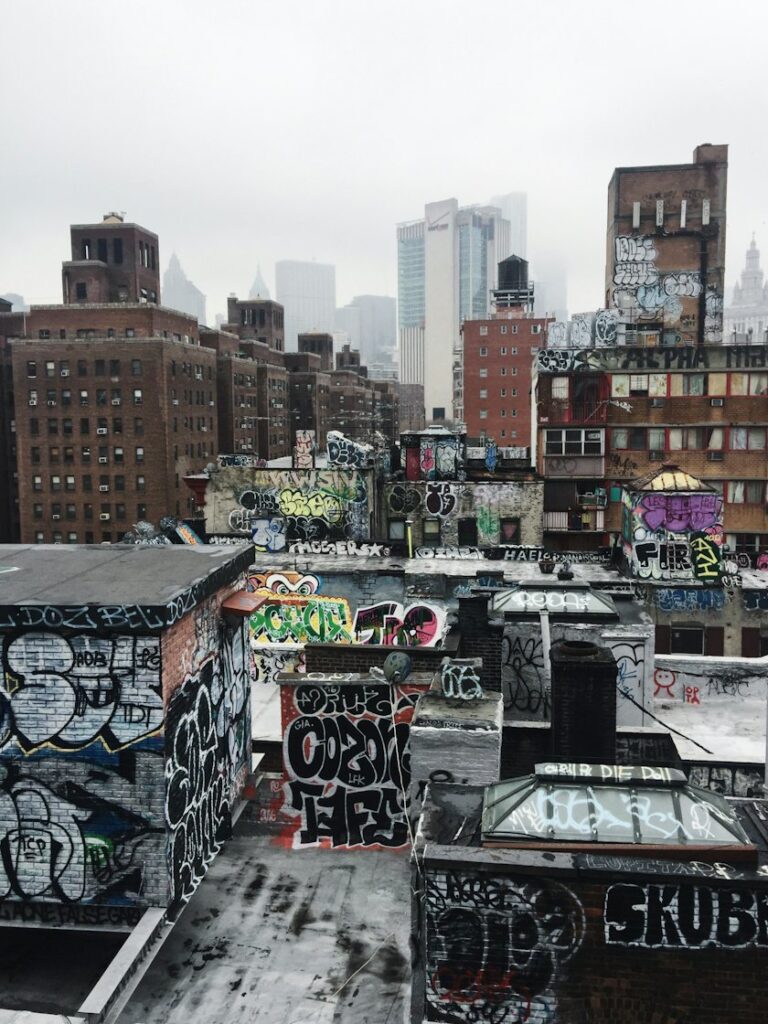
A surprising number of applicants discuss SVA without discussing New York.
This misses one of the programme’s defining characteristics.
SVA repeatedly frames its Fine Arts department through its proximity to galleries, museums, artists, curators and contemporary visual culture. The Chelsea location is not incidental. It is central to the educational model.
This creates a particular type of student experience.
Students are expected to encounter exhibitions regularly.
They are expected to engage with contemporary practice.
They are expected to understand art as something that exists beyond the classroom.
Consequently, portfolios that feel disconnected from contemporary culture often appear less convincing.
This does not mean applicants need extensive theoretical knowledge.
It means they should demonstrate awareness.
Reviewers want evidence that applicants are paying attention to the visual world around them.
How SVA Differs From RISD, Parsons and Goldsmiths
Understanding institutional differences often improves portfolio decisions.
SVA vs RISD
RISD frequently rewards material discipline and sustained formal investigation.
SVA certainly values technical ability. However, it places greater emphasis on interdisciplinary possibility and professional art-world exposure.
SVA vs Parsons
Parsons often sits closer to design culture and interdisciplinary creative industries.
By contrast, SVA Fine Arts remains firmly grounded in contemporary studio practice.
SVA vs Goldsmiths
Goldsmiths frequently attracts highly conceptual applicants.
SVA generally expects stronger evidence of making alongside conceptual thinking.
These distinctions matter because many applicants unknowingly build portfolios for the wrong institution.
The strongest applications feel specifically aligned with the school receiving them.
What Reviewers Are Trying To Predict
Admissions decisions are fundamentally predictive.
Reviewers are asking:
What will this applicant become in four years?
That question changes how portfolios are read.
A technically accomplished painting portfolio may be impressive.
Yet a portfolio showing technical competence, material curiosity, independent experimentation and emerging artistic direction may suggest greater long-term growth.
This aligns closely with the department’s educational structure.
Students begin with foundations.
They move through broad media exploration.
Eventually, they develop independent studio practice supported by critique and professional engagement.
The admissions portfolio is therefore not simply a record of achievement.
It is evidence of trajectory.
Portfolio Characteristics That Often Perform Well
Across competitive Fine Arts admissions, certain qualities repeatedly appear in stronger submissions.
When developing your School of Visual Arts BFA Fine Arts portfolio, these characteristics seem especially relevant:
- Work developed beyond classroom requirements
- Evidence of material experimentation
- Multiple projects connected by a central enquiry
- Documentation of installation or spatial thinking
- Research informing artistic decisions
- Strong observational ability
- Independent project development
- Awareness of contemporary practice
- Consistent visual decision-making
Notably, none of these qualities depend on a particular style.
SVA’s alumni include figures as different as Keith Haring, Joseph Kosuth, Elizabeth Peyton and Amy Sillman. That range suggests the department values artistic development rather than aesthetic conformity.
Portfolio Characteristics That Often Create Problems
Certain weaknesses appear repeatedly in unsuccessful portfolios.
These include:
- Excessive reliance on classroom assignments
- Technical polish without enquiry
- Random media changes without purpose
- Work that imitates contemporary artists too closely
- Repetitive imagery
- Weak documentation
- Limited experimentation
- Decorative image-making without conceptual development
- Large gaps between strongest and weakest work
Importantly, many applicants attempt to solve these issues by producing more work.
Usually the problem is not quantity.
The problem is clarity.
A portfolio should reveal how an applicant thinks.
Too often it merely reveals how much they can produce.
Where Written Materials Become Important
SVA Fine Arts remains portfolio-led.
Nevertheless, written components still matter.
The written submission should not explain the artwork into submission.
Instead, it should help reviewers understand:
- What motivates the work
- Why particular decisions were made
- How projects developed
- What questions remain unresolved
Weak writing often becomes descriptive.
Strong writing reveals thought processes.
Admissions reviewers are already looking at the images.
The writing should provide access to what cannot be seen.
For applicants struggling with this aspect of the application, Cadmium’s personal statement and writing support explores how artistic ideas can be articulated with precision rather than reduced to generic admissions language.
Preparing For SVA Starts Earlier Than Most Applicants Think
The strongest SVA applications rarely emerge in the final months before submission.
They develop gradually.
Ideas accumulate.
Projects evolve.
Experiments fail.
New directions emerge.
Applicants often spend too long refining existing work when they should be generating new material.
This is particularly true for SVA because the programme rewards curiosity and exploration alongside technical skill.
A portfolio built entirely through polishing existing projects can become static.
A portfolio built through active investigation usually feels more alive.
Students applying to multiple institutions often benefit from specialist portfolio and admissions mentorship because different schools reward different characteristics. The challenge is rarely making more work. The challenge is understanding how the work reads in relation to specific institutional cultures.
For younger applicants preparing several years in advance, foundation portfolio support can also help establish stronger artistic habits before application pressure arrives.
Useful Resources For Applicants
Applicants should review the official SVA Fine Arts programme page before building their portfolio:
https://sva.edu/academics/undergraduate/bfa-fine-arts
It is also worth exploring the department’s dedicated Fine Arts website:
https://bfafinearts.sva.edu/
Finally, applicants should regularly check current undergraduate application requirements:
https://sva.edu/academics/undergraduate/bfa-fine-arts/undergraduate-application-requirements
Reading these resources together reveals a consistent pattern. Technical skill matters. However, experimentation, independence, critique readiness and engagement with contemporary practice matter just as much.
Not Sure Whether Your SVA Portfolio Is Competitive?
The School of Visual Arts BFA Fine Arts portfolio is difficult because the programme appears broad and open. Yet the admissions logic is more specific than many applicants realise.
SVA is not simply looking for technically accomplished young artists. It is looking for applicants who can thrive inside a materially expansive, critique-driven, professionally connected contemporary art environment. A portfolio built entirely around polished outcomes may miss that. Equally, a portfolio filled with disconnected experiments can struggle to demonstrate artistic direction.
The strongest applications usually sit between those extremes. They show technical control, purposeful experimentation, and the beginnings of an independent practice. Above all, they reveal how an applicant thinks through materials, images and ideas.
Cadmium works with Foundation, BA, BFA, MA and MFA applicants through an online-first, artist-led admissions mentorship platform. Our mentors include practising artists and admissions specialists with extensive experience across UK, US and international art school applications.
For School of Visual Arts applicants, our Portfolio and Admissions Mentorship focuses on identifying repetitive, unresolved or strategically weak work, clarifying the central enquiry, strengthening project development, refining portfolio structure, improving documentation, and ensuring the application reflects the realities of SVA’s Fine Arts culture rather than generic art school advice.
Where written materials are creating problems, our writing and context support helps applicants articulate their work with greater precision and institutional awareness. Book a call if you’re unsure which programme best fits your goals.
If your SVA application deadline is approaching and the portfolio still feels fragmented, over-resolved, or difficult to explain, this is often the moment when an external critique becomes most valuable. A stronger submission frequently begins with a difficult question:
What is the portfolio actually asking admissions reviewers to believe about you as an artist?