The UCLA MFA Art portfolio requirements look deceptively simple: 15 to 20 images, supporting details, statements, and optional time-based media. However, the real difficulty is not compliance. It is interpretation. Many applicants treat UCLA as a prestigious art school that wants “strong work”. In fact, UCLA is asking a sharper question: can this artist sustain an autonomous, critically alert studio practice inside a demanding research-university art department?
That misconception matters because UCLA receives more than 500 applications for fewer than 15 places. The minimum requirements only make the application readable. They do not make it competitive.
UCLA’s own graduate admissions page states that MFA applicants are evaluated on creative work, and that the portfolio should represent the applicant’s intended medium and potential for advanced specialised study. Therefore, the portfolio must do more than display skill. It must show why the work needs graduate-level pressure now.
Applying to UCLA this year? See how we prepare applicants for UCLA.
Why UCLA MFA Art Is Not Looking for a General Art Portfolio
UCLA MFA Art is structured around six areas: Ceramics, Interdisciplinary Studio, New Genres, Painting and Drawing, Photography, and Sculpture. The graduate studies page describes a curriculum built around sustained artistic practice, exploration, experimentation, intensive studio work, and critical theory.
This matters because the area choice is not decorative. It changes how the work is read. A painting applicant is not simply submitting images that use paint. A New Genres applicant is not simply submitting video, sound, performance, or hybrid work. Instead, each applicant must show how their practice belongs to an area while still thinking beyond narrow medium categories.
A common mistake is to submit a portfolio that feels like a survey of competence. The work may be technically strong, but it does not generate a position. UCLA is more likely to respond to a portfolio that reveals pressure: repeated investigation, material decisions, formal risk, and a visible relationship between research and studio action.
For applicants trying to understand whether their portfolio reads as a graduate practice rather than a collection of good works, Cadmium’s Portfolio and Admissions Mentorship focuses on the structure, editing, and admissions logic of the submission.


UCLA MFA Art Portfolio Requirements: The 15 to 20 Image Problem
The official UCLA MFA Art portfolio guidelines require a portfolio of no fewer than 15 and no more than 20 still images. Each image needs title, year, medium, and size. Installation, performance, and project-based work also need brief descriptions.
On paper, this looks manageable. In practice, it is severe. Fifteen to 20 images leave little room for weak repetition, undergraduate exercises, or unrelated experiments. However, the limit also gives enough space to show development. That is where many applicants fail.
A competitive UCLA portfolio usually needs to show:
- a body of work, not isolated successes
- current work, not only older resolved pieces
- clear area fit
- material and conceptual necessity
- professional documentation
- evidence that the practice can keep developing
The danger is false variety. Applicants often include one painting, one installation, one video still, one drawing, one object, and one research image to appear interdisciplinary. However, UCLA’s version of interdisciplinarity is not a buffet. It needs method, pressure, and internal logic.
The Portfolio Must Carry More Weight Than Usual
UCLA MFA Art has an unusual admissions structure because recommendation letters are not part of the normal review. Applicants provide references, but unsolicited letters are not included in the review. Consequently, the portfolio and written statements must stand without external endorsement.
This changes the applicant’s task. A famous referee cannot explain the work for you. A previous tutor cannot rescue a confused submission. A prestigious undergraduate institution cannot compensate for a portfolio that does not know what it is asking.
Therefore, each artwork has to function as evidence. Scale, material, duration, site, surface, editing, image quality, and caption detail all matter. In a fast faculty review, unclear documentation becomes an admissions problem, not a technical inconvenience.
For installation, performance, sculpture, ceramics, social practice, and time-based work, documentation should not merely record that something happened. It should show how the viewer encountered the work, how the material behaved, and why the form mattered.
Time-Based Work: Why 12 Minutes Is Not Generous
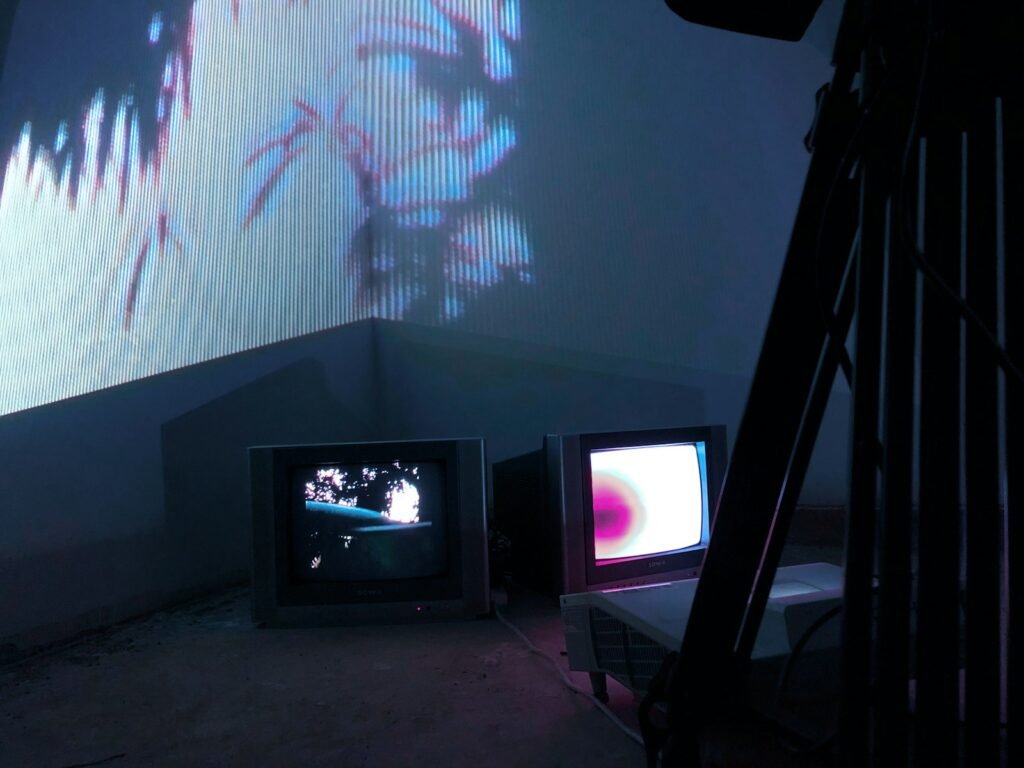
UCLA allows up to four time-based media files, with no more than 12 total minutes normally reviewed. The guidelines recommend excerpts of three minutes or less. This is not a casual instruction. It tells applicants how faculty time works.
The worst approach is to upload long files and hope the reviewer finds the important section. That suggests poor judgement about audience, pacing, and review conditions. Instead, excerpts should reveal the work’s central intelligence quickly.
For moving image, performance, sound, and hybrid work, the still images also matter. UCLA asks time-based applicants to submit stills or performance documentation within the image portfolio. Therefore, the application must translate duration into a readable visual argument.
A weak time-based submission often fails in one of three ways. First, the excerpt feels like a trailer rather than the work. Next, the stills do not explain the spatial or performative situation. Finally, the description uses theory to cover for unclear editing.
New Genres Is Not Film School by Another Name
The UCLA New Genres page includes moving image, sound, performance, installation, hybrid, and emerging forms. However, UCLA also warns that applicants from theatre, film, music, writing, or new media generally need strong engagement with the contemporary visual-art field.
This distinction is critical. A filmmaker applying to New Genres cannot rely only on narrative craft. A performer cannot rely only on stage documentation. A writer cannot submit literary work as if language automatically becomes visual art.
Instead, the portfolio has to show how the work thinks through image, body, site, duration, audience, display, technology, or institution. The question is not “is this creative?” The question is “does this operate as contemporary art?”
This is where area fit becomes unforgiving. If the work belongs more clearly to film, theatre, design, music, or creative writing, UCLA may read the application as misdirected. However, if the work uses those forms to test visual-art conditions, it can become much more persuasive.
What “Potential for Advanced Specialised Study” Really Means
Many applicants misread “potential” as promise. They assume it means raw talent, enthusiasm, or broad possibility. At UCLA MFA Art, potential is more exacting. It means the faculty can see a practice that will intensify under critique.
That potential must already be visible in the work. It may appear through unresolved questions, but not through confusion. It may appear through experimentation, but not through random media-switching. It may appear through ambition, but not through inflated statements.
A strong portfolio often shows an artist pressing repeatedly on a problem. For example, a painter might test how automotive surface, portraiture, and community history alter the space of painting. A sculptor might use found industrial materials to examine labour, extraction, or bodily pressure. A New Genres applicant might treat sound, performance, and archive as interdependent forms rather than separate outputs.
In each case, research becomes visible through the work itself. It does not sit beside the work as explanation.
UCLA’s Culture: Autonomy, Critique, and Pressure
UCLA describes its MFA students as artists who thrive in an environment that encourages autonomy. The programme also emphasises full-faculty reviews, group critique, visiting artist lectures, critical theory, and intensive studio production.
Therefore, the application must suggest readiness for a particular kind of pressure. UCLA is not selecting applicants who need assignments to begin working. Nor is it selecting applicants who can only defend finished objects. It is selecting artists who can make, test, revise, argue, and continue under critique.
This is why over-polished portfolios can feel surprisingly weak. If every work appears sealed, tasteful, and risk-free, the faculty may struggle to see what graduate study will do. Conversely, an unresolved body of work can be compelling when its problems are live, specific, and productive.
The applicant needs to show that the work can absorb critique without losing its centre.
The Three Statements Should Not Say the Same Thing
UCLA requires several written components. The Artist Statement, Statement of Purpose, and Personal Statement have different jobs. Yet many applicants collapse them into one repeated autobiography.
The Artist Statement should clarify the practice. It should name the central enquiry, materials, methods, and recent development. However, it should not over-explain every image.
The Statement of Purpose should explain why graduate study is necessary now and why UCLA is the right context. This means area fit, faculty culture, research-university resources, Los Angeles, critique structure, and studio needs.
The Personal Statement can add context that helps the committee understand formation, perspective, contribution, resilience, teaching potential, or community engagement. However, it should not repeat the Artist Statement in biographical form.
For applicants whose writing flattens the work, Cadmium’s Writing and Research Mentorship helps refine statements so they become precise, practice-led, and institution-specific.
Common UCLA MFA Art Portfolio Mistakes
The most common UCLA mistakes are not small technical errors. They are failures of reading.
Applicants often weaken their submission when they:
- treat the portfolio as a “best work” archive
- choose an area without understanding its discourse
- submit too many unrelated experiments
- use captions that hide scale, duration, site, or material
- rely on prestige rather than practice
- write a Statement of Purpose that could fit any MFA
- use theory to compensate for underdeveloped work
- present time-based work without disciplined excerpts
- reapply without showing clear evolution
Importantly, UCLA’s application format exposes these mistakes quickly. Because the portfolio is compact, weak inclusions are visible. Because letters are not reviewed, the work cannot be externally vouched for. Because the area choice matters, vague interdisciplinarity becomes a liability.
How to Build a More Competitive UCLA Submission
A stronger UCLA application begins by asking what the portfolio is making believable. Not what it contains. Not what it claims. What it proves.
First, the work should show a sustained artistic problem. This does not mean everything must look the same. Rather, it means the admissions reader can follow why one decision leads to another.
Next, documentation must be edited with faculty review in mind. If a sculpture changes from front to back, show that. If an installation depends on the viewer’s body, show scale. If a performance produces residue, show both the action and its aftermath.
Finally, the writing should sharpen the application rather than decorate it. The strongest statements do not inflate the work. They make its stakes legible.
Applicants who need an external read before submission often begin with Cadmium’s Art School Portfolio Review, especially when the work feels promising but the application logic remains unclear.
Why Parents Often Misread UCLA MFA Competitiveness
Parents often look for familiar markers: grades, rankings, references, awards, and the reputation of the previous institution. Those markers may matter in context. However, UCLA MFA Art is much more portfolio-led.
This can be unsettling. A student may have strong grades and still be uncompetitive. Another may have fewer formal accolades but a far sharper studio practice. Therefore, families should not treat the application as a conventional graduate admissions exercise.
The practical support parents can give is not to over-manage the work. Instead, they can help protect time, fund proper documentation, encourage rigorous feedback, and ask whether the applicant can explain why UCLA, why this area, and why now.
Cadmium’s FAQ on portfolio and admissions preparation is useful for families trying to understand how portfolio review, interview preparation, and written support fit together.
Not Sure Whether Your UCLA MFA Art Portfolio Is Competitive?
The UCLA MFA Art portfolio is difficult because the requirements appear contained. Yet the real standard is severe. UCLA is looking for evidence that an applicant can enter an autonomous, critique-heavy, research-university MFA and use that pressure with seriousness.
A portfolio built only on polish may not be enough. Similarly, a portfolio full of disconnected experiments may miss the point. The strongest applications show authored direction, material intelligence, research habits, area fit, and the ability to write about work without turning it into generic admissions language.
Cadmium works with Foundation, BA, BFA, MA, MFA and PhD applicants through an online-first, artist-led admissions mentorship platform. Our mentors include practising artists and admissions specialists with experience across US, UK and international art school applications.
For UCLA applicants, our Portfolio and Admissions Mentorship focuses on identifying weak, repetitive, or unresolved work, clarifying the central enquiry, refining how the portfolio reads, strengthening documentation, and developing statements that make the practice sharper rather than safer. Where writing is the weaker part of the application, our Writing and Research Mentorship helps applicants articulate the work with precision, context, and institutional relevance.
If your UCLA MFA Art application is approaching and the portfolio still feels scattered, over-polished, or difficult to explain, this is the moment to get a sharper read. You can book a 1h expert consultation to discuss your route, deadline, and which mentorship route fits.
A stronger UCLA submission usually begins with one uncomfortable question: what is the work asking faculty to believe about you?