
Applying to Yale’s Painting / Printmaking MFA is often misunderstood as a question of talent, polish, or having a few exceptional images. However, the Yale Painting Printmaking MFA portfolio requirements suggest something more exacting. Yale is asking whether your practice has present-tense pressure: material, conceptual, historical, and critical. That distinction matters because a beautiful but static portfolio can fail at Yale. The School is not simply looking backwards at achievement. Instead, it is testing whether your work can survive two years of intense critique, research, and public presentation.
Yale School of Art is a graduate school conferring MFA degrees in Graphic Design, Painting / Printmaking, Photography, and Sculpture. Applicants apply to a specific area, and Yale states that applying to more than one area requires separate applications and does not increase the chance of selection. For Fall 2024 admission, Yale published an MFA acceptance rate of 6%, which places every portfolio decision under severe pressure. The Yale School of Art graduate admission page is therefore not just administrative reading. It is evidence of how Yale expects applicants to think.
Applying to Yale this year? See how we prepare applicants for Yale.
Every deadline in one place: our 2027 art school deadlines, month by month.
Applying to Yale as an undergraduate instead? Our guide to the Yale art supplement and the BA art major covers that route.
What Yale Painting / Printmaking Is Actually Selecting For
Yale’s Painting and Printmaking programme page describes the programme as rooted in the investigation of painting as a distinct genre with its own syntax and history. At the same time, it encourages diversity of practice, interpretation, innovation, and experimentation. That combination is important. Yale does not treat painting as a fixed medium, yet it also does not treat experimentation as permission for looseness.
For this reason, a competitive portfolio needs more than range. It needs a felt argument about what painting, printmaking, surface, image, pressure, reproduction, scale, or material encounter can do now. Moreover, the work must show that the applicant understands the historical weight of the medium without being trapped by it.
Many applicants misread Yale as either conservative or purely conceptual. Both readings are weak. Instead, Yale appears to value artists who can make form, material decision, subject matter, and research behave as one system. A painting is not strong because it is large. A print is not strong because it is technically impressive. The question is whether the work knows why it takes that form.


Yale Painting Printmaking MFA Portfolio Requirements in Practice
Yale’s official portfolio requirements are unusually revealing. Painting / Printmaking applicants must upload 16 still and/or moving image files. All work must have been completed within the last three years, and at least half should come from the last twelve months. Yale also states that the admissions committee is concerned with scale and tactility, so paintings and drawings must be photographed showing the edge of the work. They must not be digitally masked to the edges.
This is not a minor technical instruction. It tells us how Yale reads painting. The edge, surface, wall, stretcher, paper, margin, and surrounding space all matter because they locate the work as an object. Consequently, over-clean documentation can erase the very qualities Yale wants to assess.
For three-dimensional works, Yale asks applicants to show surrounding space and context. In addition, it limits detail shots. Video files time out at one minute for Painting / Printmaking. Therefore, the portfolio must be edited with precision. A slow pan, vague studio clip, or overlong performance fragment may weaken the application before the work has been understood.
Why Recent Work Matters More Than Old Success
Yale’s emphasis on recent work is one of the most important admissions clues. At least half the Painting / Printmaking portfolio should come from the last twelve months, and all work must sit within a three-year window. Therefore, an applicant cannot rely on a strong undergraduate painting from two years ago if the current practice has drifted.
This matters especially for applicants who have awards, exhibitions, or technically accomplished older work. Those achievements may be useful, but Yale wants to see current artistic direction. The committee is not assembling a retrospective. Instead, it is asking whether the practice is alive now.
A stale portfolio often has a particular look. It contains polished pieces from different moments, but the works do not press against one another. One canvas explores figuration, another performs abstraction, a third gestures towards archive or text, yet nothing shows why these decisions belong together.
By contrast, a competitive Yale portfolio can contain shifts. However, those shifts must feel necessary. The viewer should sense a mind testing a problem through material decisions, not an applicant trying to prove versatility.
The Misunderstood Role of Tactility
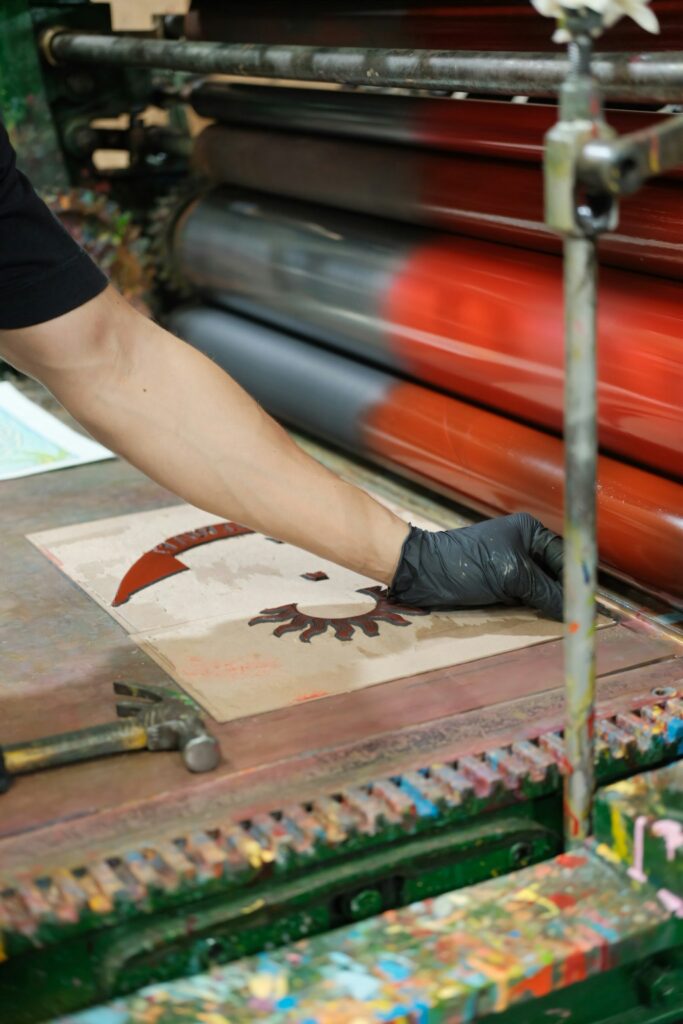
Yale’s concern with tactility should make applicants slow down. In many digital submissions, painters flatten the work until every surface becomes a JPEG. However, Yale’s requirements suggest that this flattening can damage the application.
Tactility is not just texture. It is evidence of how the work has been made, resisted, corrected, pressed, stained, layered, scraped, printed, transferred, or exposed. Similarly, scale is not just size. It changes the viewer’s relation to the work, and it alters the psychological charge of an image.
Because of this, documentation becomes part of the argument. A strong Yale submission should make clear:
- how large the work is in relation to the body
- what kind of support or surface is being used
- whether edges, margins, frames, seams, folds, or installation choices matter
- how print processes affect the image, not just how they produce it
- whether the work needs wall, floor, space, or proximity to be understood
Poor photography is therefore not a cosmetic error. It can make serious work appear generic. In Painting / Printmaking, that is fatal.
Yale’s Critique Culture Starts Before Admission
Yale’s MFA structure centres studio practice, but it embeds that practice in critique. The School describes graduate education through individual and group critiques, visiting critics, seminars, and broader dialogue across the School. In addition, Yale’s bulletin describes Critical & Professional Practices and interdepartmental critique as part of the wider graduate structure.
This affects admissions. Yale is not only asking, “Is the work good?” It is also asking, “Can this applicant think under pressure?” Moreover, the School needs artists who can contribute to a small, demanding peer community.
A portfolio that is too closed can read as fragile. It may look finished, but it gives no space for development. Conversely, a portfolio that is too open can read as unresolved. Yale’s strongest applicants usually occupy the difficult middle ground: the work has conviction, yet it also has questions.
For MA and MFA portfolio support, Cadmium often begins by identifying whether a portfolio can tolerate scrutiny. If the central idea collapses after two questions, the issue is not presentation. It is artistic structure.
The Statement Is Not Decorative
Yale asks for a one-page statement addressing current practice, interests, influences and/or lived experiences relative to the subject matter of the work and research, plus goals for graduate study. For Painting / Printmaking, Yale also asks applicants to refer to the designated representative work. That instruction matters.
Many applicants still write the statement as biography. They describe childhood creativity, love of painting, or admiration for Yale. However, Yale’s prompt asks for something sharper. It wants the applicant to interpret the work from inside the practice.
A strong statement should not explain away the portfolio. Instead, it should give the committee a clearer way into the decisions already visible in the work. For example, an applicant working with repeated domestic images might discuss compression, memory, reproduction, and surface damage. Another working with print might discuss transfer, delay, index, multiplicity, or failure.
The writing must remain close to the work. Therefore, avoid inflated theory. If a sentence could sit beside any contemporary painting practice, it is too vague. Cadmium’s personal statement and writing support is designed for this exact problem: writing that stays intellectually serious without becoming detached from the studio.
The Representative Work Carries More Weight Than Applicants Think
Yale requires applicants to designate one representative work for the cover page of the application file. This is a small instruction with large consequences. It forces the applicant to choose the work that best opens the practice.
The representative work does not have to be the largest or most polished piece. Instead, it should give the clearest access to the portfolio’s central intelligence. It should show what is at stake formally, materially, and conceptually.
For Painting / Printmaking, this decision is especially delicate. A seductive image may not be the best representative work if it hides the process. Likewise, an experimental piece may not be strong enough if it needs too much explanation. The right choice often sits where visual force and conceptual pressure meet.
Applicants should ask three questions:
- Does this work establish the central problem of the practice?
- Does it show Yale why material and scale matter?
- Does it make the rest of the portfolio easier to read?
If the answer is no, the portfolio may need restructuring before submission.
Common Portfolio Failures at Yale
Yale’s requirements expose several recurring applicant mistakes. These mistakes often appear in otherwise promising portfolios, which makes them more dangerous.
First, many applicants overpack the submission. They use composite images, excessive detail shots, or unclear documentation because they want to show more. However, Yale explicitly warns against composite images. The result can look anxious rather than rigorous.
Second, some portfolios confuse breadth with development. The committee sees many styles, but no sustained enquiry. This may suggest energy, yet it rarely suggests readiness for Yale.
Third, applicants often hide scale. They crop paintings too tightly, mask edges, or photograph work without spatial context. Consequently, Yale cannot read objecthood, surface, or physical ambition.
Fourth, statements often generalise. Phrases about identity, memory, materiality, or the body can be meaningful. However, without specific formal evidence, they become admissions noise.
Finally, some applicants present themselves as already resolved. That can be a problem. Yale wants independence, but it also wants growth. A portfolio that refuses critique may appear professionally neat and pedagogically unsuitable.
Painting / Printmaking Is Not a Safe Medium Category
The slash in Painting / Printmaking matters. Yale integrates printmaking into the broader painting area rather than treating it as a separate technical lane. Therefore, applicants should not assume that painting means canvas and printmaking means technical supplement.
Print can operate as image, object, reproduction, pressure, trace, system, repetition, publication, or refusal of singularity. Painting, likewise, can move through installation, support, surface, performative making, digital mediation, or expanded material practice. However, every expansion must remain legible.
This is where many applicants lose force. They use expanded practice to avoid committing to a position. Yale is unlikely to reward ambiguity when it looks like indecision. Instead, the work needs to show why painting or printmaking remains the right field of pressure.
For applicants whose work crosses installation, photography, text, or moving image, the issue is not whether Yale will allow it. The issue is whether the work still belongs convincingly within Painting / Printmaking. That distinction should shape both selection and writing.
How Yale Differs From Other Competitive Fine Art Programmes
Yale is not simply the American equivalent of the RCA, Slade, Goldsmiths, or Central Saint Martins. It overlaps with them, especially in its concern for research, critique, and contemporary practice. However, its structure is different.
Yale admits by specific MFA area. It has a two-year graduate model, small departmental cohorts, and a strong critique culture. Its public portfolio rules are also more exacting than many UK programmes. For Painting / Printmaking, the insistence on recent work, edge visibility, tactility, and concise digital files gives applicants a precise view of how the School reads work.
The public visibility of Yale’s thesis exhibitions also matters. The 2025 Painting / Printmaking MFA Thesis Exhibition shows the programme’s expectation that student work can operate in a public exhibition context, not only in studio review.
Therefore, applicants should not prepare a generic MFA portfolio and adapt it at the end. Yale needs to be considered early. The work must already show the kind of self-directed, critique-ready practice that the programme can intensify.
What a Competitive Yale Portfolio Needs to Demonstrate
A serious Yale Painting / Printmaking portfolio should make several things visible at once. It should not ask the committee to trust that the applicant has potential. It should show that potential through decisions.
Most competitive portfolios will demonstrate:
- current work with a clear direction
- formal control without academic stiffness
- material intelligence, especially around surface, scale, edge, and support
- conceptual pressure that remains visible in the work
- research that affects form, not just statement language
- evidence that the applicant can edit ruthlessly
- readiness for critique, rather than dependence on reassurance
Importantly, Yale does not appear to seek one house style. Instead, it seeks internal logic. A portfolio can be quiet, abrasive, figurative, abstract, process-led, image-based, materially dense, or spatially expanded. However, it must know what it is doing.
This is why generic portfolio advice fails. “Show your best work” is too blunt. Yale asks a more difficult question: what does your best work reveal about how you think now?
Preparing the Portfolio Without Flattening the Practice
The best Yale preparation begins before formatting. Applicants need to diagnose the practice itself. Which works carry the most pressure? Which works are technically accomplished but conceptually redundant? Where does the portfolio repeat itself without development? Where does it open a question and then abandon it?
Only after that analysis should selection begin. For Yale, the order of work should help the committee read the practice clearly. It should not feel like a chronology alone, nor should it feel like a dramatic sales pitch. Instead, the structure of the portfolio should make the inquiry legible.
Documentation then needs equal care. Photograph paintings with visible edges. Show scale honestly. Avoid artificial masking. Use detail only when necessary. Moreover, do not let the file become slicker than the work.
Cadmium’s online-first portfolio and admissions mentorship works through these decisions with applicants applying to highly selective programmes. The aim is not to make the work safer. Rather, it is to identify weak, repetitive, or unresolved elements so the final submission reads with authority.
Interview Preparation Begins in the Portfolio
Yale states that applicants who pass the Preliminary Selection Jury are notified in early February, with interviews scheduled in mid to late February depending on programme. Yale also states that the interview is an important component of the final selection process.
This means interview preparation cannot begin after the invitation. The portfolio already sets the terms of the conversation. If the work is unclear, the interview becomes defensive. If the statement overclaims, the applicant must explain a gap between language and evidence.
A strong Yale interview should sound precise, responsive, and unscripted. Applicants need to discuss process, influences, failures, material choices, and current questions without reciting prepared paragraphs. Moreover, they need to show that critique will sharpen the work, not destabilise it completely.
For this reason, art school interview preparation should be anchored in the actual portfolio. Generic question practice is not enough. Yale will not be impressed by rehearsed seriousness if the applicant cannot speak directly about the work in front of them.
The Parent View: Why Yale Requires Strategic Preparation
For parents, Yale’s 6% acceptance rate can make the process look like a lottery. However, that framing is misleading. Selectivity is severe, but the application is not random. Yale’s requirements give serious clues about what the School values: current work, independent practice, formal and technical skill, research, critique readiness, and disciplined presentation.
The risk is not that an applicant lacks talent. More often, the risk is that the portfolio does not make the talent readable. Strong individual works can fail as an application if they do not form a coherent body of enquiry. Likewise, ambitious ideas can fail if the documentation hides scale or material presence.
Strategic preparation should therefore protect the applicant’s artistic voice while making the work legible to a highly selective committee. That is a delicate balance. Too much polishing can sterilise the work. Too little editing can make it look immature.
Cadmium’s artist-led admissions mentorship platform is built for this pressure point: serious applicants, demanding deadlines, and portfolios that need sharper direction before they can withstand competitive review.
Preparing a Yale Painting Printmaking MFA Application?
The Yale Painting Printmaking MFA portfolio requirements are not just a checklist. They reveal how Yale reads artistic maturity. The School wants recent work, material intelligence, critical pressure, and the ability to develop inside a demanding critique culture.
If your portfolio contains promising work but feels scattered, over-edited, poorly documented, or difficult to articulate, the issue needs attention before submission. Yale will not do that interpretive work for you.
Cadmium works with Foundation, BA, BFA, MA and MFA applicants through an online-first, artist-led mentorship system. Our mentors include practising artists and admissions specialists with years of experience in US and international art school applications, including experience on admissions panels for leading art schools. We help applicants identify weak or unresolved work, clarify the central enquiry, refine portfolio structure, strengthen documentation, and write about the practice without flattening it into generic admissions language.
For a serious Yale application, the question is not whether the work is good in isolation. The question is whether the portfolio can convince a highly selective committee that the practice is ready for Yale.
If you need a focused diagnosis before committing to full mentorship, book Cadmium’s 90-minute expert portfolio review. We will assess the current level of the work, identify what is weakening the application, and give you clear, institution-literate next steps.
If you are not sure which level of support is right, book a 1h expert consultation first. We will help you decide whether your Yale application needs a portfolio review, deeper MA / MFA mentorship, or targeted writing and interview preparation before the final edit becomes irreversible.