A strong RISD Painting BFA portfolio is not simply a folder of polished paintings. Yet many applicants still prepare as though technical finish is the central question.
Applying to RISD this year? See how we prepare applicants for RISD.
That misconception matters because RISD does not admit first-year undergraduates directly into a specialist Painting pathway. Instead, all first-year students enter Experimental and Foundation Studies, a shared foundation year built around Drawing, Design and Spatial Dynamics. Only later do students move into their chosen major.
As a result, RISD is not only asking whether you can paint. It is asking whether you can think through making, observe closely, test materials, absorb critique and develop work beyond the first competent answer. The official RISD first-year admissions page makes this clear through its emphasis on portfolio evidence, process and recent work.
For a future Painting major, the challenge is therefore more exacting. The RISD Painting BFA programme asks students to develop critical and technical skills, not simply a recognisable painting style. Your portfolio must show painterly intelligence without becoming narrow too early.
For applicants unsure whether their work is reading at this level, Cadmium’s Portfolio & Admissions Mentorship gives critique-led guidance on what to cut, develop and reframe before submission.
Comparing several US schools? Our guide to what US art schools look for in a portfolio covers the ground they share.
Why RISD Painting BFA Admissions Start Before Painting
RISD’s Painting BFA sits within a four-year undergraduate structure. However, the first year does not operate as a departmental silo. Every first-year student begins in Experimental and Foundation Studies, where studio work is broad, critique-heavy and materially exploratory.
This structure changes the admissions logic.
A RISD reviewer is not looking for a finished young painter with a stable signature style. In fact, a portfolio that looks too settled can become a liability. If every image uses the same surface, scale, subject and compositional habit, the work may read as controlled but closed.
Instead, RISD needs to see whether the applicant can enter a rigorous first-year studio culture and keep developing. That is different from looking talented in one familiar mode.
For Painting applicants, this means the portfolio should show:
- serious drawing or painting from direct observation
- material curiosity beyond school assignments
- a developing point of view
- clear decisions from one work to the next
- enough technical control to make ambition credible
Consequently, a folder of attractive acrylic portraits will rarely be enough. It may show diligence. It may even show skill. However, it may not show readiness for RISD.


How the RISD Painting BFA Portfolio Is Read Through Foundation Studies
A persuasive RISD Painting BFA portfolio must understand the institution’s foundation-year model. RISD’s first-year curriculum is question-led. Its educational language connects making, inquiry, critique, research and formal analysis.
Therefore, the portfolio should not behave like a sales catalogue. It should read as evidence of a mind testing itself.
For example, a painting might sit beside an observational drawing, a constructed object, a sketchbook study or a material experiment. The aim is not random variety. Rather, the aim is to show how the applicant thinks across form.
For a future painter, this can be subtle. A charcoal drawing might reveal how you understand weight and light. Meanwhile, a small oil study might show how colour carries emotional pressure. In another slide, a painted object or textile work might expose a concern with skin, memory, domestic space or containment.
Importantly, range should not dilute the application. It should deepen the argument. RISD wants applicants who can move through uncertainty without losing judgement.
The Mistake of Submitting Only “Good Paintings”
Many applicants believe the safest RISD strategy is to submit their most finished paintings. Usually, that produces a flat application.
Finish is not the problem. RISD expects the majority of the portfolio to contain resolved work. However, the real question is what the finished work proves.
A technically smooth painting copied from a photograph does not necessarily show observation. Likewise, a large expressive canvas does not automatically show risk. A realistic portrait may show control, but it may not show artistic judgement.
RISD requires 12 to 20 examples of recent work through SlideRoom. Its guidance places emphasis on “thinking and making”, and it recommends including some drawing or painting from direct observation rather than relying only on photography, video or imagination.
That recommendation is precise.
RISD does not demand academic realism as an end in itself. Instead, it wants to see whether you can look, select, translate and interpret. Direct observation reveals decisions that photography often hides: proportion, pressure, distance, edge, atmosphere and correction.
For Painting applicants, this evidence matters. Paintings from life can show whether you understand the visible world before transforming it. Cadmium’s BA / BFA Portfolio Support is designed for applicants who need to identify whether their current work proves that level of observation, or merely looks finished.
What “Point of View” Means at RISD
RISD’s admissions language places strong weight on work with a point of view, developed concepts and evocative ideas. However, applicants often misread that phrase.
A point of view is not a theme written in the corner of a slide. Nor is it a decorative artist statement pasted over weak work. It is also not enough to choose a topic such as identity, nature or memory and repeat it across ten pieces.
In a portfolio, point of view appears through decisions.
It may appear in scale. It may sit in the tension between a precise observational drawing and a rougher painted surface. Alternatively, it may emerge through repeated attention to a particular object, body, landscape, cultural memory or domestic space.
The mistake is to confuse subject matter with position.
For instance, a painting of a family member is not automatically personal. A painting about climate is not automatically critical. Equally, a self-portrait is not automatically psychologically charged. RISD reviewers need to see how the work thinks.
A stronger self-portrait might begin with mirror observation. Then it might be disrupted through reflection, fabric, erasure, cropping or altered colour. As a result, the work begins to ask how self-image is constructed. That is closer to a point of view.
Direct Observation Still Matters
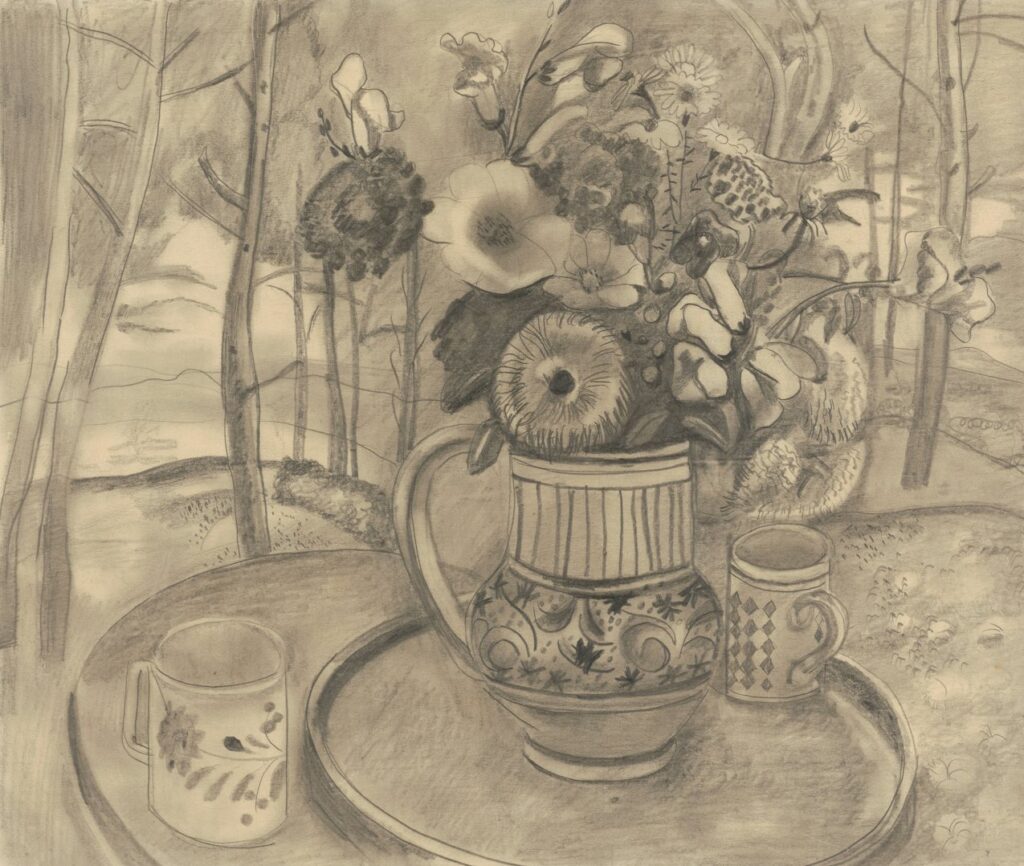
RISD’s recommendation for direct-observation drawing or painting is not conservative. On the contrary, it is central to how the first year works.
Observation is not obedience to reality. Rather, it is a test of attention. It shows whether the applicant can deal with complexity before simplifying it.
In a painting portfolio, this might include interiors, figure studies, still life, architectural fragments, hands, fabric, plants, tools or ordinary objects under difficult light. These subjects do not need to be spectacular. However, they do need to be seen.
The weaker version is easy to recognise. An applicant copies a phone image, removes every awkwardness and produces a finished but inert picture. By contrast, the stronger version accepts friction. It shows proportion being negotiated. It lets surface, time and looking remain visible.
This matters because RISD’s first-year curriculum includes Drawing as a core studio discipline. Moreover, RISD treats drawing as part of broader art and design intelligence, not as a narrow technical add-on.
For future painters, direct observation can also correct a common portfolio weakness: decorative surface without spatial understanding. Paint can seduce. Nevertheless, RISD will still ask what the painting knows.
How Much Process Should You Show?
RISD suggests that applicants may include research or preparatory work in up to three slides. This guidance is useful, but it is often mishandled.
Some applicants show no process at all. Consequently, their portfolio becomes a wall of outcomes with no visible thinking. Others go too far and fill slides with fragments, thumbnails and sketchbook pages until the application looks unresolved.
Neither approach serves the work.
Process evidence should answer a specific question. For example, it might show how a painting moved from observation into abstraction. It might reveal colour tests, material trials, compositional alternatives or source research. Most importantly, it should clarify why a work changed direction.
However, process should not become decoration. A page of weak sketches does not strengthen a strong painting. Likewise, a collage of tiny images can make the reviewer work too hard.
RISD also discourages cluttered slides, excessive text and poor documentation. Therefore, process should be used sparingly and with intent. It should make the final work more legible, not compete with it. Cadmium’s Foundation Portfolio Support helps applicants decide which research, sketches and preparatory material genuinely clarify the work, and which slides make the portfolio look less resolved.
Painting, Material Intelligence and Experimentation
RISD’s Painting BFA should not be treated as a narrow canvas-only route. The department sits within a wider institutional culture that values experimentation, critical thinking and material investigation.
As a result, applicants should avoid reducing Painting to a set of oil paintings on canvas. That may be part of the portfolio. However, it should not become the whole argument unless the work has exceptional range within that format.
A strong Painting applicant might use paint, drawing, collage, constructed surfaces, stained fabric, book forms, objects, projection or photography. Yet the medium shift must make sense.
For example, an applicant painting domestic interiors might build a small constructed room to test spatial compression. Someone painting skin, hair or fabric might explore touch through material studies. Similarly, a student working with landscape might use pigment, drawing and photography to examine place.
The point is not to look experimental on demand. Instead, experimentation should expose a sharper question.
RISD will see through decorative variety. It will also see when a material decision carries pressure.
Common RISD Portfolio Failures
The most damaging RISD portfolio mistakes are rarely only administrative. More often, they are artistic and structural.
The first failure is narrow polish. This portfolio looks impressive at a glance but offers little development. It often contains repeated portraits, similar palettes and a single learned style.
Another failure is derivative stylisation. RISD’s guidance warns against work such as master copies, fan art and heavily recognisable cartoon or anime-derived imagery because these can obscure the applicant’s own authorship. Stylisation is not the enemy. Inherited visual language is.
A third failure is weak observation. Applicants who rely almost entirely on screens, photographs or imagined figures often look unprepared for a drawing-led first year.
Performative experimentation is also common. This happens when a portfolio includes one sculpture, one textile work and one photograph with no internal logic. RISD values experimentation, but only when material decisions test an idea.
Finally, poor documentation can damage serious work. Dim images, distracting backgrounds, cramped composites and excessive slide text make the applicant look careless. At RISD, documentation reads as judgement.
The Common App Essay Is Not a Decorative Extra
RISD’s formal writing requirement for first-year applicants centres on the Common Application essay. Many applicants treat this as separate from the portfolio. However, that separation weakens the application.
The essay does not need to explain every artwork. In fact, it should not become a portfolio caption in prose form. Instead, it should sound like the same mind that made the work.
For Painting applicants, the essay can clarify how you notice, question and make decisions. It might deal with a place, a material, a family structure, a cultural pressure, a failure, a habit of looking or an unresolved question.
The subject can be modest. The thinking cannot be vague.
Weak essays usually perform maturity. They rely on inflated language about creativity, identity and ambition. Stronger essays reveal a mind under pressure. They show how the applicant observes the world and why that observation matters.
Because RISD values risk in expression, applicants should not over-sanitise the essay. However, risk still needs control. A distinctive voice is only persuasive when it is precise. Cadmium’s Writing & Context Support helps applicants remove generic admissions language and develop writing that reads as specific, disciplined and connected to the work itself.
Optional Portfolio Reviews Are Not Admissions Decisions
RISD offers optional portfolio-related events, including portfolio workshops, Portfolio Days and National Portfolio Day participation. These can be useful. However, RISD’s own portfolio review guidance for first-year admissions makes clear that these events do not replace the formal application.
That distinction matters for both students and parents.
A positive conversation at a review event does not mean the portfolio is ready. Equally, a difficult critique does not mean the application has failed. These settings are developmental. Their value lies in what the applicant does afterwards.
A serious applicant should listen for patterns. Did the reviewer question the lack of observation? Did they ask why the work stays in one medium? Did they seem unconvinced by the relationship between idea and material? Alternatively, did they spend more time on presentation than on the work itself?
That feedback should then affect the portfolio. Otherwise, the event becomes theatre.
RISD’s culture is critique-heavy. Therefore, applicants should show that they can use criticism before they arrive. RISD’s article on how first-year students learn the art of critique is a useful source for understanding this culture from inside the foundation-year classroom.
How a Competitive RISD Painting BFA Portfolio Should Read
A competitive RISD Painting BFA portfolio does not need to look like a miniature professional exhibition. Instead, it should read as a convincing body of evidence.
The reviewer should be able to see:
- what the applicant notices
- how they make decisions
- where they take risks
- how they handle observation
- how materials carry ideas
- whether the work can grow through critique
For Painting, the portfolio should include enough painting to establish commitment. Yet it should not become a narrow painting-only submission unless the work has exceptional depth. Even then, drawing, process evidence and material testing usually strengthen the application.
The strongest portfolios often hold several tensions at once. They show control and instability. They include direct looking and imaginative transformation. They contain resolved works and traces of investigation. Above all, they show ambition without pretending to be fully formed.
That final point is crucial. RISD is not looking for closure. It is looking for capacity.
What Parents Often Misread
Parents often look for visible skill first. This is understandable. Skill is easier to recognise than artistic judgement.
However, RISD admissions does not reward neatness alone. A parent may prefer the most polished painting in the room. By contrast, a RISD reviewer may be more interested in the awkward piece that reveals a sharper question, a stranger material decision or a more active relationship to observation.
This is where unguided preparation can become risky.
Families sometimes spend months producing more finished pieces without asking whether the portfolio’s underlying logic is strong enough. The student works harder, but the application does not necessarily become more competitive. It simply becomes fuller.
For RISD, more work is not the answer if the existing work is misdirected.
The central task is diagnosis. Which pieces prove direct observation? Which works feel derivative? Which paintings are technically competent but conceptually thin? Which experiments matter? Which pieces should be removed because they weaken how the portfolio reads?
These are admissions decisions, not cosmetic edits.
Preparing for RISD Without Losing the Painting Ambition
A future Painting applicant should not suppress their commitment to painting. RISD will want to see serious engagement with the medium. However, the portfolio should show painting as inquiry, not as brand identity.
This might mean developing a small cluster of works around one pressure point. Possible concerns might include the body, domestic space, inherited objects, colour and memory, ecological change, urban surfaces, ritual, food, fabric, screens, family photographs or self-image.
From there, the applicant can test that concern through observation, painting, drawing and selected material experiments. The aim is not to appear scattered. Rather, the aim is to show that painting can think beyond a single surface.
A RISD-ready portfolio usually requires subtraction as much as production. Weak works must go. Safe pieces may also need to go. In the end, the portfolio has to leave the reviewer with a clear sense of a young artist who can enter EFS and expand under pressure. Cadmium’s Portfolio & Admissions Mentorship gives applicants critique-led guidance on what to remove, what to develop, and how to make the portfolio read as an institution-specific application rather than a general art-school submission.
Not Sure Whether Your RISD Painting BFA Portfolio Is Competitive?
A RISD Painting BFA portfolio has to do more than prove that an applicant can paint. It has to show observational intelligence, material judgement, conceptual development and readiness for a first year built around critique, experimentation and cross-disciplinary studio work. The official RISD first-year admissions page is clear that portfolio review centres on recent work, thinking and making, not only technical finish.
That balance is difficult. Too much polish can look closed. Too much experimentation can look unfocused. Too much explanation can suffocate the work. Meanwhile, too little process can make the ideas disappear.
How We Help RISD Applicants
Cadmium is an online-first, artist-led admissions mentorship platform for serious Foundation, BA, BFA, MA and MFA applicants. For RISD applicants, we examine the work at the level that matters: what should be removed, what needs to be developed, where observation is missing, how the portfolio reads, and whether the application makes sense for RISD’s institutional culture.
Through critique-led mentorship, we help applicants correct specific portfolio failures before submission. That may mean identifying derivative work, rebuilding weak project logic, strengthening direct observation, refining written context or making the presentation more institution-literate. Cadmium’s BA / BFA Portfolio Support is designed for applicants who need this level of admissions-specific portfolio diagnosis.
For RISD, the goal is not a prettier portfolio. It is a portfolio with point of view, direct looking, material risk and enough discipline to withstand serious critique.
If you are not sure whether your current work is competitive, you can book a 1h expert consultation to discuss your portfolio, your timeline and whether Cadmium’s mentorship is the right fit. For applicants who need a concentrated diagnosis before making decisions, Cadmium also offers a 90-minute expert portfolio review / surgery, focused on what to cut, what to develop, and how to make the application read more sharply before submission.