
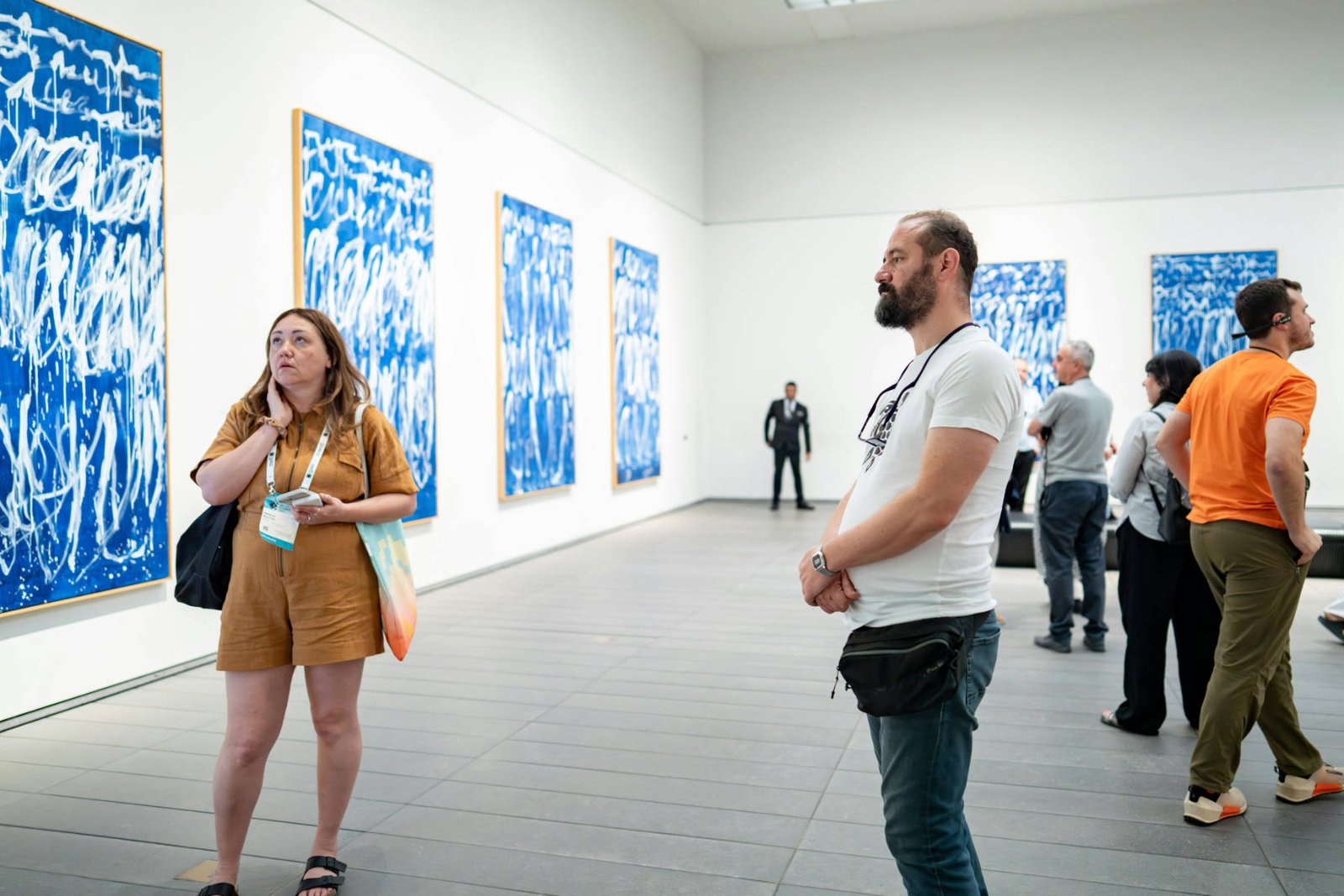
A museum confirms an exhibition. A commission is agreed. The work is ambitious, large-scale, and publicly positioned as culturally significant.
Then the budget arrives.
Not reduced. Not tight. Absent.
The expectation is unstated but clear: the artist will find a way to produce the work regardless.
This is no longer an exception. It is becoming structural.
The quiet transfer of cost
Recent reporting across the US and UK points to a consistent pattern: funding has not simply declined, it has been redistributed.
Local authority arts spending in England has fallen by more than half since 2010. Entire councils now operate with no arts budget at all. At the same time, national investment remains concentrated geographically, with significantly higher per-person spending in London than in the north.
In the US, artists with confirmed institutional exhibitions are now routinely covering production costs themselves, sometimes tens of thousands of dollars, in order to realise work that institutions have already committed to showing.
The result is not just underfunding. It is a transfer of financial responsibility from institution to individual.
And that shift is rarely made explicit.
Institutions still programme ambition, but no longer fund it
What has not changed is the level of ambition expected of artists.
Large installations, complex fabrication, research-led work, public engagement: these remain central to institutional programming. The scale of what is asked has not reduced.
What has changed is who absorbs the risk.
When budgets contract, exhibitions are one of the first areas to be cut. But exhibitions cannot disappear entirely. Instead, the cost is redistributed, quietly, across artists, galleries, and external partners.
The institution retains the programme.
The artist inherits the gap between concept and execution.
Access is no longer just about visibility
For decades, the argument around arts funding has centred on access: who gets to see art, where, and under what conditions.
That question is now incomplete.
The more urgent question is: who can afford to make the work in the first place?
When artists are expected to self-fund exhibitions, access shifts upstream. It is no longer about audiences being excluded. It is about artists being filtered out before the work exists.
Those without independent financial support, or commercial gallery backing, are forced to scale down, delay, or withdraw entirely.
Opportunities remain visible. Participation becomes conditional.
The illusion of opportunity
From the outside, the system still appears functional.
Exhibitions continue. Biennials open. Museums expand. Cultural investment is announced in headline figures – £1.5bn packages, new buildings, major capital projects.
But these signals obscure a different reality at the level where work is actually produced.
An artist preparing for a museum exhibition may still be unable to afford fabrication.
A mid-career practitioner may have institutional recognition but no financial stability.
A regional arts organisation may exist in name but lack the resources to programme meaningfully.
The appearance of opportunity remains intact. The conditions required to realise it are eroding.
Geography is becoming destiny again
The funding imbalance between London and the rest of the UK is not new. What is changing is its consequence.
When funding contracts, concentration intensifies.
Regions that once sustained active cultural ecosystems, Liverpool, Cumbria, smaller northern towns, now face prolonged institutional closures, reduced programming, and declining infrastructure.
At the same time, artists in high-cost cultural centres are leaving altogether, unable to sustain practice alongside rising living costs and reduced support.
Mobility, once seen as a strength of the cultural sector, is increasingly a necessity for survival.
The return of an older question
In 1965, Jennie Lee’s white paper proposed a simple idea: access to the arts should be a public good, not a private privilege.
That principle shaped decades of cultural policy.
Today, the question has re-emerged in a more complicated form.
If artists are expected to finance the production of publicly exhibited work, then the system is no longer publicly funded in any meaningful sense.
The public sees the exhibition. The private risk sits with the artist.
What happens next
There are proposed solutions: tax reform, new funding models, regional redistribution, philanthropic incentives, institutional transparency.
Many of these are practical. Some are overdue.
But none address the central tension.
The cultural sector continues to position artists as foundational; essential to its existence, central to its value.
Yet structurally, artists remain the least protected part of the system.
Until that contradiction is resolved, funding reform will continue to operate at the level of adjustment rather than change.
A system that still depends on belief
Despite all of this, the system continues to function.
Work is still made. Exhibitions still open. Artists still accept commissions that do not fully fund themselves.
Not because the system works, but because artists continue to believe in the work.
That belief is currently compensating for structural failure.
The question is not whether the system can continue like this.
It is how long it expects to.
Cadmium is an artist-led, critique-based platform supporting applicants and practising artists in developing stronger, more resolved work.