
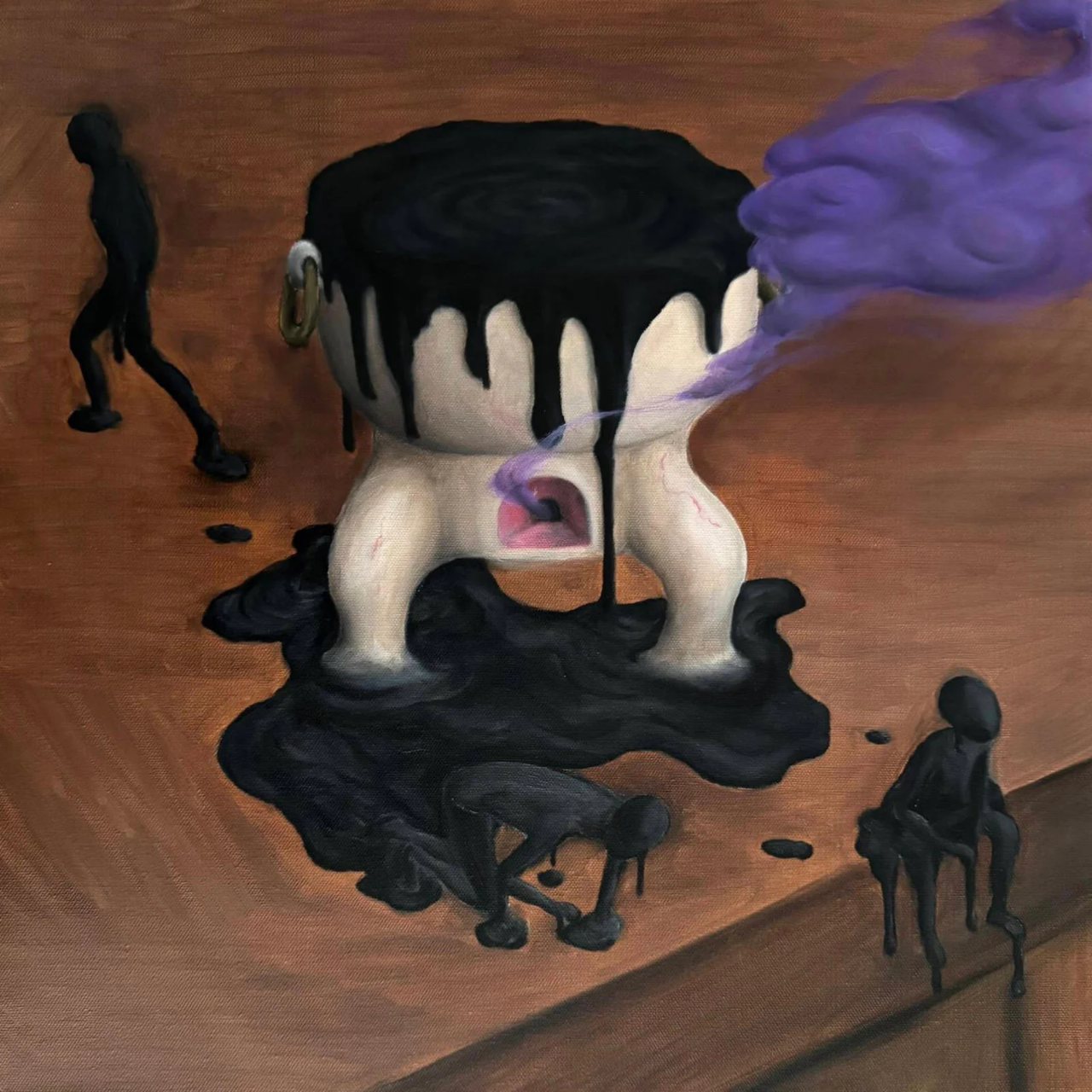
Many students, particularly those applying internationally, assume that courses at Central Saint Martins and London art schools more broadly, given their prestige and global reach, are highly structured, with teaching focused on refining technique. In reality, it’s quite different.
Applying to Central Saint Martins this year? See how we prepare applicants for Central Saint Martins.
To demystify what the programme is actually like, as well as the application process, we spoke to one of our former students, Chen, who worked with us over several months through our Portfolio & Admissions programme and is currently studying on the Central Saint Martins MA Fine Art Programme. He came from a finance background, and his formal art education prior to this was at high school in China. He describes the teaching there as being primarily focused on technical skill and realism, with less emphasis on developing ideas, context, or engaging with contemporary art, which made the shift to London particularly significant. After that, he worked intensively on his portfolio and was accepted into multiple schools, including Central Saint Martins, Goldsmiths and Camberwell, which makes his perspective especially useful.
How to build a portfolio for Central Saint Martins (and why most people get it wrong)
A key part of the process was learning how to translate the same body of work depending on where he was applying. Different schools are looking for different things, and part of the work was adjusting how the portfolio was framed, edited, and read.
This is often where applicants fall short, especially when approaching art school portfolio preparation. It’s not just about producing strong work, but about understanding how that work is positioned, what is emphasised and what is held back.
When Chen first came to us, his work was quite illustrative. The ideas were there, but they were being explained too directly, almost narrated. The paintings told you what they meant, rather than letting the meaning emerge through how they were constructed.
Part of the shift was in how he approached image-making. We set briefs that pushed him to hold onto the same underlying concerns, but to move away from explaining them literally. Instead, the focus became how the painting itself could carry the idea through composition, placement, and the way elements relate to each other.
Just as importantly, we leaned into his lived experience and what he was already drawn to, rather than trying to make the work fit a preconceived idea of what a “fine art” portfolio should look like. His interests and references became the point of difference, and something to push further rather than smooth out.


Portfolio example: moving from illustration to a coherent body of work
You can see that clearly in Chen’s piece Divination.
Chen’s full Central Saint Martins portfolio example is on his case study page.
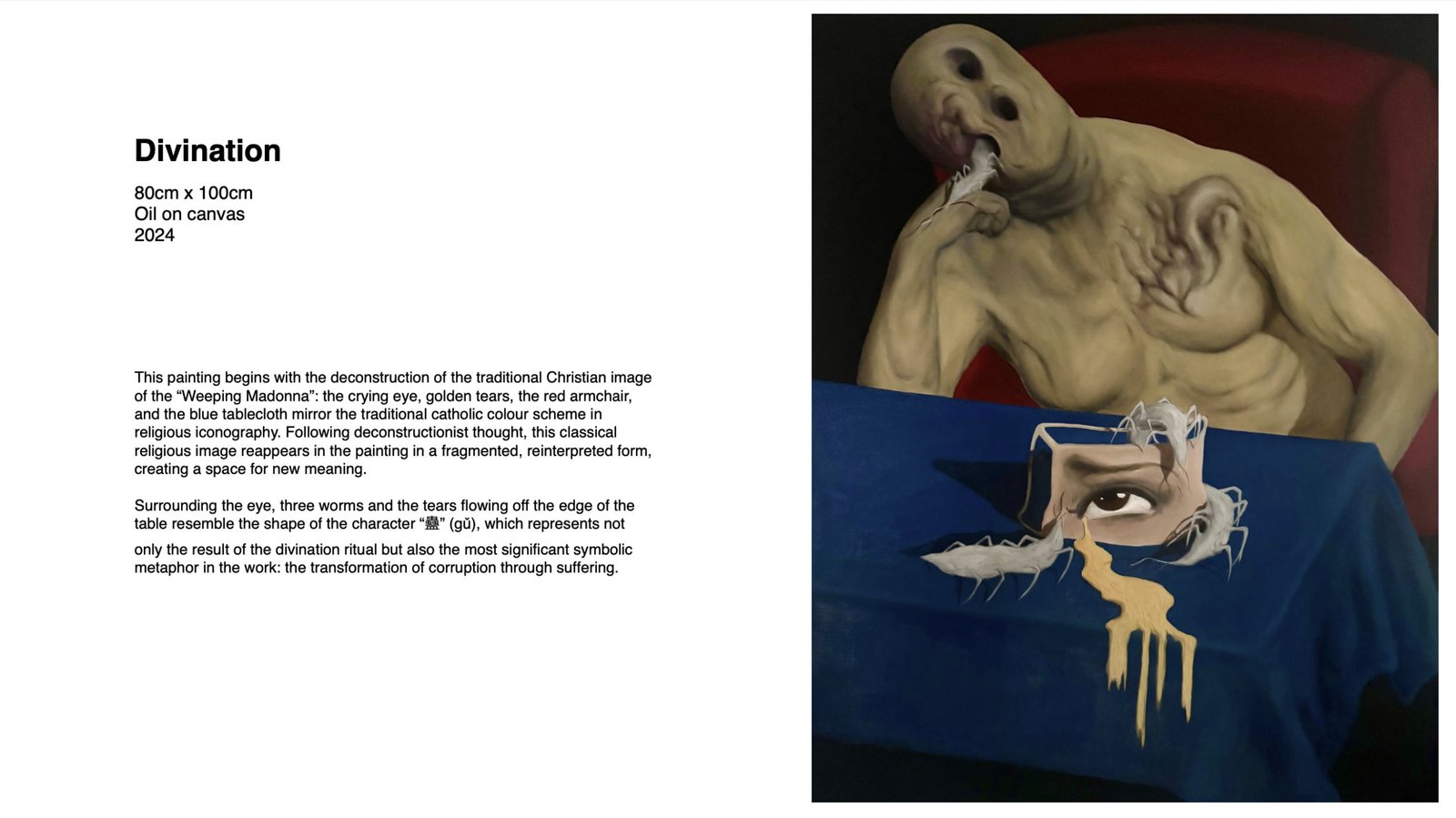
The painting draws on the “Weeping Madonna”, but it isn’t presented as a clear or stable image. Everything is slightly displaced. The eye sits inside the table, the tears spill out of the surface, and the body feels unstable rather than fully formed. You’re not being told exactly what the painting means. You have to work it out through the image.
At the same time, the structure of the composition is tied to the Chinese character “蠱”. That reference is there, but it isn’t explained or illustrated directly. It’s built into how the painting is organised.
What changed is this. Instead of making paintings that clearly describe an idea, he started making paintings where the meaning comes through how the image is constructed.
That was the shift.
Why sketchbook and preparatory work matter in a CSM portfolio
We also included one page of preparatory work and references in Chen’s portfolio.
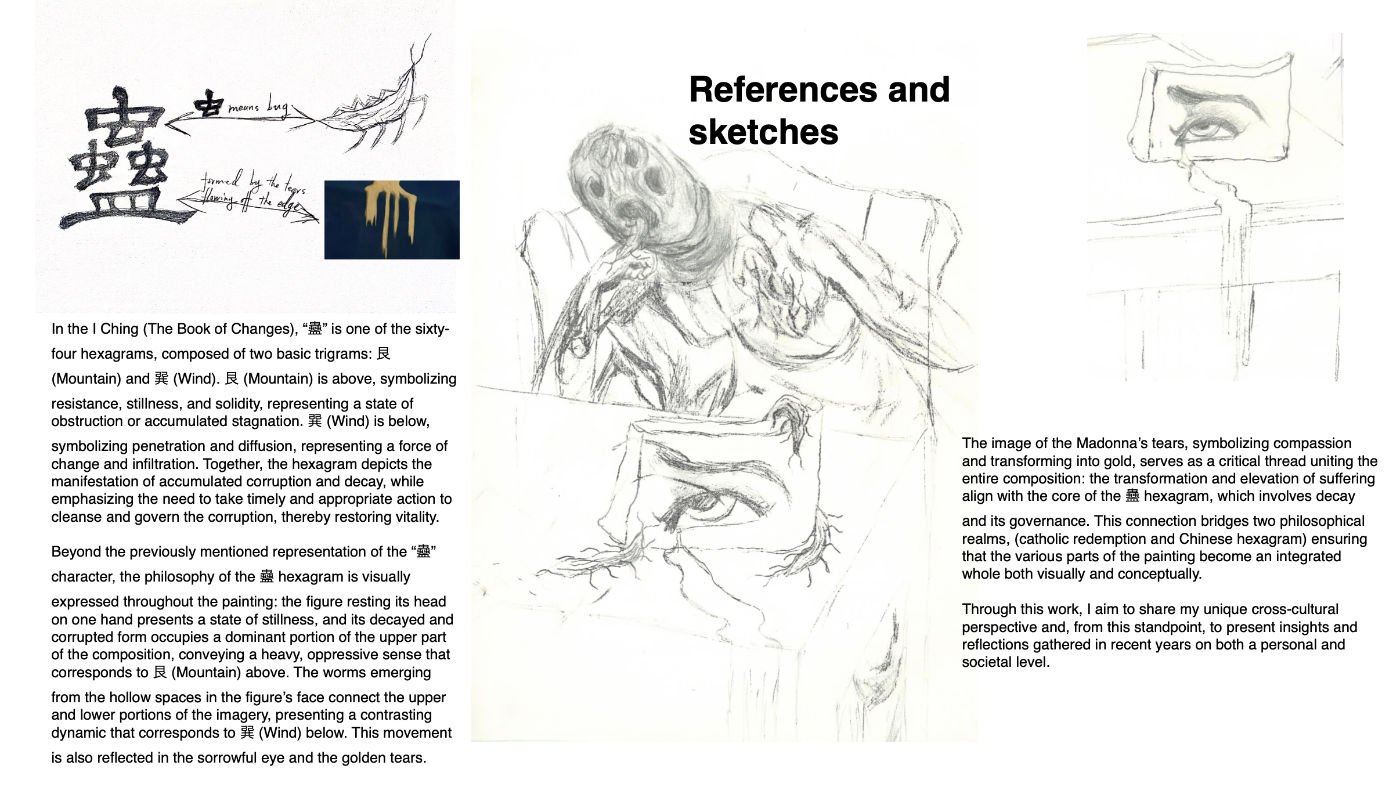
This wasn’t about presenting a polished “sketchbook aesthetic”, but about showing how he thinks. You can see the source material, the drawings, and how the ideas begin to take form before they’re worked into a painting.
This matters more than people realise. Schools like Central Saint Martins are not looking for a perfected style. They want to understand how you think, what you’re paying attention to, and how that thinking translates into the work.
Developing ideas: from initial concept to resolved work
An earlier painting in the portfolio shows where this started.
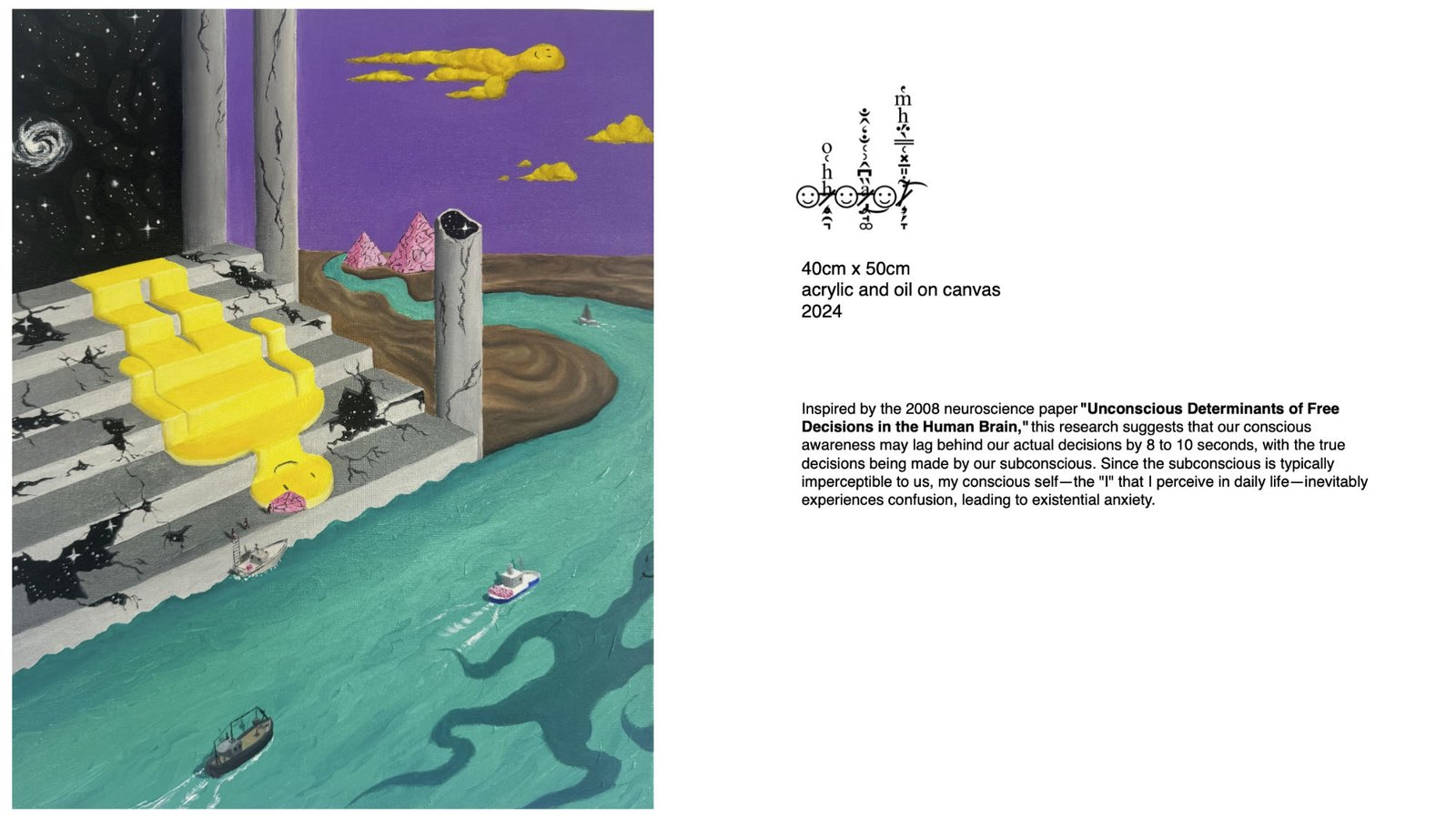
Here, he was trying to work through the idea of a melting figure more directly. The image is clear, but still quite fixed in how it communicates. That gap, between what he wanted to express and how it was appearing, became the point to work on.
Alongside this, he began pushing his idea by getting out of his comfort zone.
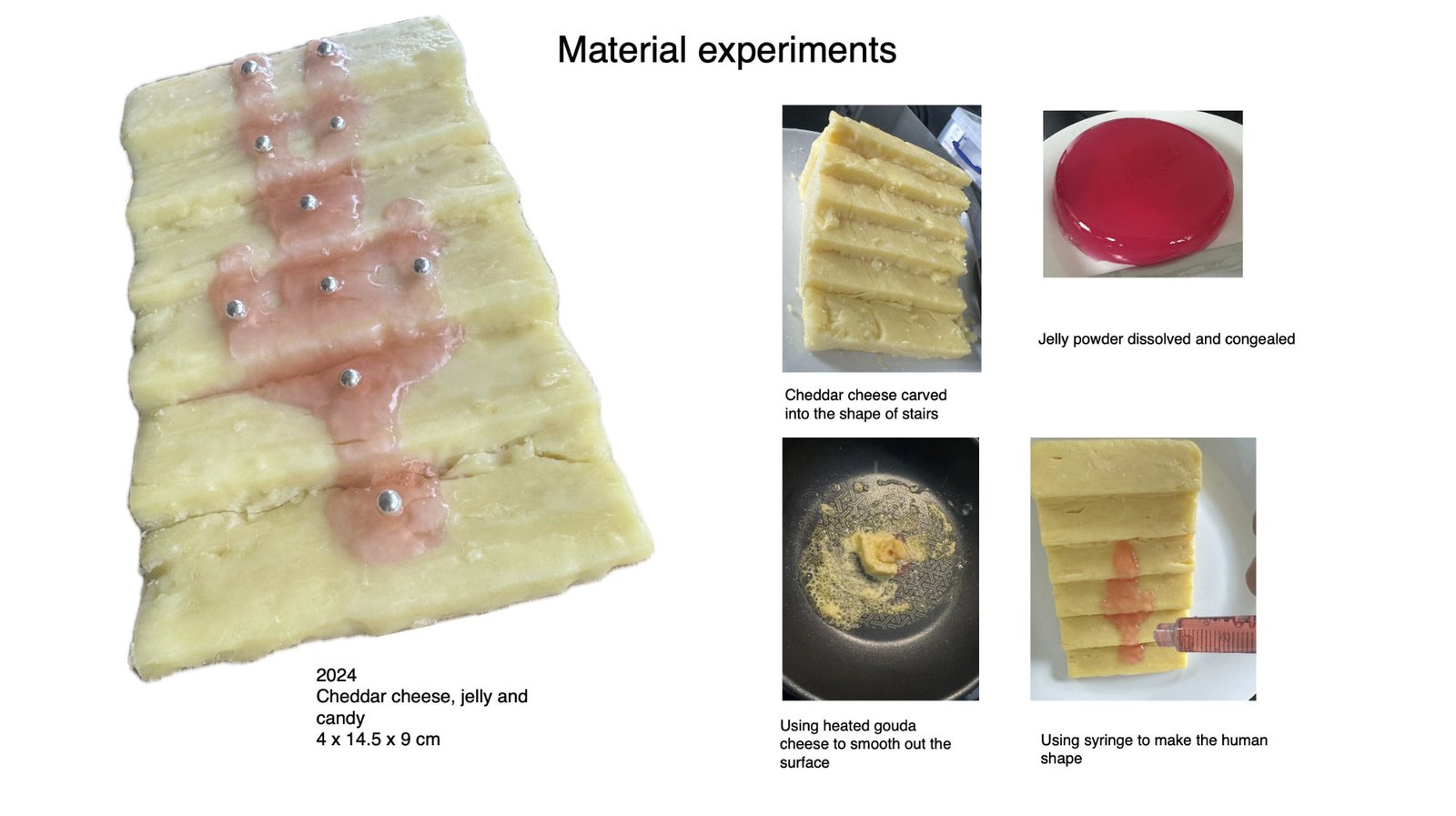
Instead of trying to paint “melting”, he tested it physically using whatever he had at home, materials that could actually slump, shift, and fall apart. It was playful, a bit stupid at times, and that was the point. It loosened the image and opened up a different way of thinking, which then carried through into the later paintings.
By the time he arrived at works like Divination, he wasn’t describing the idea anymore. He was building it through the painting.
What Central Saint Martins MA Fine Art is actually looking for
What’s important is that this shift isn’t just personal to his work. It lines up very directly with what Central Saint Martins is actually looking for.
One of the clearest things he said was that technical ability isn’t the primary factor in selection. As he put it, they’re interested in “what is underpinning your practice… not how much drawing or painting technique you can perform.” That came up repeatedly. It’s not about how much you can do. It’s about whether the work holds together as a body and has a clear position behind it.
The application and interview process (CSM, Camberwell, UAL)
Interestingly, he didn’t have an interview for Central Saint Martins. Where interviews do happen, though, the focus is very similar.
In his Camberwell interview, the conversation stayed on two works, and everything came back to context and intention. In his words, “they really care about the context… they just want to know the story behind it.” That’s exactly why we spent time clarifying what the work was doing and how he could speak about it without defaulting to explanation.
What the MA Fine Art course at Central Saint Martins is really like
Once on the course, the structure is much looser than most applicants expect. He described it as “very chill… nobody really tells you what to do.” That’s not a negative, but it does catch people out. There’s less direct teaching than people imagine, and more responsibility on the student to shape their own development.
A lot of the learning happens through the people around you. He spoke about spending time in the studio, looking at other people’s work, and having conversations that shift how you see your own. That became one of the most valuable parts of it for him, especially being around people who had been working in art for much longer.
It’s also worth saying that painting isn’t the dominant mode on the course. There are painters, but you’re just as likely to be surrounded by work involving performance, text, archives, or other approaches. That was something he had to adjust to. It pushes you out of a fixed way of working.
There are also smaller things people don’t always realise. The course is based in Archway, not King’s Cross. The facilities aren’t really the point. What matters more is the environment you’re working within.
What you actually get from studying at Central Saint Martins
Ultimately, what you get from it is access. To other artists, to ongoing conversations, to a wider context.
As he put it, “I learn a lot from my classmates… they’ve been doing art much longer than me.” The course gives you the conditions, but what you take from it depends on how you use it.
Advice for applying to Central Saint Martins MA Fine Art
When we asked what advice he’d give to applicants, he was very clear. It all hinges on the depth of the portfolio.
His phrasing was to “contextualise your work really deeply” and to “demonstrate yourself more bravely.” That second part matters. The stronger applications aren’t the most polished. They feel self-initiated and distinct in what they’re doing.
He also said something quite simple that stuck. “What people value here… is just different.” That’s where most people go wrong. They approach it with the wrong criteria, focusing on output instead of how the work is actually operating.
Final thoughts: how to approach your portfolio
Central Saint Martins is a strong environment, but only if you understand it on its own terms. It won’t do the work for you. It assumes you can take responsibility for your work and push it further within that.
So the question isn’t whether the work is “good enough”. It’s whether it reads properly. Whether it’s coherent, well-positioned, and doing what you think it’s doing.
If it isn’t, the answer usually isn’t to make more work. It’s to look harder at what’s already there and resolve it.
If you’re unsure whether your portfolio reads this way, you can review more student work or work with us directly.